If you are wondering what to eat after a workout to gain muscle, start with a simple formula: choose a quality protein, add a carbohydrate-rich food, include produce, and drink enough fluid to replace what you lost. Chicken with rice and vegetables, Greek yogurt with oats and fruit, eggs with toast, or tofu with noodles can all work.
Your postworkout meal matters, but it is not a magic switch. Consistent resistance training, enough food across the day, adequate total protein, and sleep have a greater effect on long-term muscle growth than one perfectly timed shake.
What Should You Eat After a Workout to Build Muscle?
The best postworkout meal for muscle gain combines protein, carbohydrates, fluids, and a varied mix of whole foods. Protein provides essential amino acids for muscle remodeling, while carbohydrates restore training fuel and help you meet the energy demands of regular exercise.
Use this four-part meal builder:
| Meal component | What it does | Practical choices |
|---|---|---|
| Quality protein | Supplies essential amino acids for muscle protein synthesis | Eggs, chicken, fish, Greek yogurt, cottage cheese, milk, tofu, tempeh, edamame, beans, lentils |
| Carbohydrate | Replenishes muscle glycogen and supports future training | Rice, oats, potatoes, bread, pasta, quinoa, fruit |
| Produce | Adds fiber, vitamins, minerals, and dietary variety | Berries, bananas, oranges, leafy greens, peppers, mixed vegetables |
| Fluid | Replaces water lost through sweat | Water, milk, soy milk, or an electrolyte drink when the session was unusually long, hot, or sweaty |
A mixed meal does not have to follow a rigid macro formula. A palm-sized protein food, a comfortable serving of carbohydrates, and fruit or vegetables is a useful visual starting point for many adults. Appetite, body size, training volume, medical needs, and the time until the next workout can all change the appropriate amount.
A quick decision guide
Choose your recovery food based on what happened around the workout:
- You ate a balanced meal one to three hours before training: Eat your next normal protein-containing meal within a few hours.
- You trained first thing in the morning or without a recent meal: Eat protein and carbohydrates soon after you finish.
- You have another demanding session later that day: Prioritize a larger carbohydrate serving, protein, fluids, and sodium.
- You completed a short, moderate home workout: A regular meal and water are usually enough.
- You have little appetite: Use an easy-to-digest option such as milk or fortified soy milk blended with yogurt or protein powder, oats, and fruit.
Why Protein Matters After Strength Training
Resistance training makes skeletal muscle more responsive to dietary protein. Eating protein during the recovery period supplies essential amino acids that support muscle protein synthesis, the process used to repair and remodel muscle tissue.
Muscle growth occurs when repeated training and recovery produce a positive net protein balance over time. One meal cannot create that result by itself. Progressive overload, sufficient recovery, and protein distributed across the day all contribute.
An International Society of Sports Nutrition position stand reports that 20–40 grams of high-quality protein per meal, or roughly 0.25–0.40 grams per kilogram per meal, is a commonly supported range for stimulating muscle protein synthesis in exercising adults. It also notes that the ideal amount varies with age, body size, training, and meal composition. (Kerksick et al., 2017)
What counts as high-quality protein?
A high-quality protein is digestible and supplies all nine essential amino acids in useful amounts. Leucine is one of the amino acids involved in signaling muscle protein synthesis. However, it works as part of a complete amino acid supply, not as a substitute for a balanced protein food.
Examples include:
- Eggs
- Dairy foods
- Poultry, fish, and lean meat
- Soy foods such as tofu, tempeh, edamame, and soy milk
- Whey, casein, soy, or blended plant protein powders
Beans, lentils, chickpeas, nuts, seeds, and whole grains also contribute protein. People eating a plant-based diet can meet their needs by eating enough total protein and including varied sources throughout the day. Research reviews have found that soy protein can support gains in muscle mass and strength similarly to animal protein when protein intake and resistance training are adequate. However, the evidence is stronger for soy than for every individual plant protein. (Lim et al., 2021)
How Much Protein Should You Eat After a Workout?
For many healthy adults, a meal containing roughly 20–40 grams of protein is a practical research-based target after resistance training. Smaller people and lighter sessions may fall toward the lower end, while larger adults, older adults, or people completing a demanding full-body workout may benefit from the upper end.
This range is guidance, not a rule that everyone must measure precisely. You can build a useful meal from familiar foods:
- Eggs plus milk or Greek yogurt
- A moderate serving of chicken, turkey, fish, or lean beef
- A generous bowl of Greek yogurt or cottage cheese
- Tofu or tempeh with edamame
- Lentils or beans paired with another protein-rich food or grain
- A protein shake when a meal is not convenient
Total daily protein matters more than one meal
Long-term muscle growth depends more on total daily protein and consistent training than on a single postworkout serving. A large meta-analysis of resistance-training studies in healthy adults found that the average added benefit of protein for lean mass tended to level off around 1.6 grams per kilogram of body weight per day, although individual responses varied. (Morton et al., 2018)
The ISSN gives a broader daily range of 1.4–2.0 grams per kilogram per day for most exercising adults. These figures come mainly from adult research and are not individualized prescriptions. (Jäger et al., 2017)
You do not need to count every gram to apply the principle. Include a meaningful protein source at breakfast, lunch, dinner, and, if useful, one snack. That usually works better than eating very little protein all day and trying to make up for it at night.
How Soon Should You Eat After a Workout?
Most people should eat a protein-containing meal within a few hours after training, but there is no universal 30-minute deadline. The timing becomes more important when you trained without eating or went several hours between your last meal and the workout.
The so-called anabolic window is better understood as a broad recovery period. Exercise increases the muscle’s sensitivity to protein for many hours. A meal eaten before training can also continue supplying amino acids during and after the session.
Use this timing framework:
| Situation | Practical timing |
|---|---|
| Balanced meal eaten 1–3 hours before training | Eat the next normal meal within a few hours |
| Fasted morning workout | Have protein and carbohydrates soon afterward |
| More than 4–5 hours since the last protein-rich meal | Eat as soon as practical after training |
| Two hard sessions in one day | Begin refueling promptly, especially with carbohydrates and fluid |
| Late evening workout | Eat a comfortable protein-rich meal or snack before bed |
Research on nutrient timing supports protein around the training period but also emphasizes that the size and timing of the preworkout meal affect how urgent the postworkout meal is. (Kerksick et al., 2017)
Missing the ideal meal time occasionally will not erase a workout. Eat when you can, then return to your normal meal pattern.
Do You Need Carbohydrates After Strength Training?
Carbohydrates are useful after lifting because they replenish muscle glycogen, provide energy, and make it easier to eat enough food to support repeated training. The amount and urgency depend on how much glycogen the workout used and how soon you need to perform again.
Postworkout carbs are especially helpful when:
- The workout was long or high volume
- You trained a large amount of muscle
- You also completed endurance work
- You play a sport in addition to lifting
- You will train again later that day
- You struggle to maintain energy through the week
For one ordinary strength session followed by a full day of recovery, total daily carbohydrate intake is usually more important than choosing a fast-digesting carb immediately. A 2021 systematic review found that adding protein can improve short-term glycogen restoration when carbohydrate intake is below optimal. However, carbohydrate remains the primary driver when rapid glycogen recovery is the goal. (Craven et al., 2021)
Good post-workout carbohydrate sources include:
- Rice
- Potatoes or sweet potatoes
- Oats
- Wholegrain bread or wraps
- Pasta or noodles
- Quinoa and other grains
- Bananas, berries, oranges, mangoes, and other fruit
- Beans and lentils, which provide both carbohydrates and protein
Fruit is a useful addition, but fruit alone usually does not provide enough protein for a muscle-building post-workout meal. Pair it with yogurt, milk, soy milk, eggs, cottage cheese, tofu, or another protein source.
Should You Avoid Fat After a Workout?
No. Healthy fats can be part of a post-workout meal, and there is no need to remove them for muscle growth. Fat may slow digestion, but that is rarely a problem after a routine workout, especially if you ate before training.
Useful choices include:
- Olive oil
- Avocado
- Nuts and seeds
- Nut or seed butter
- Salmon, sardines, and other oily fish
If a large, high-fat meal causes nausea after hard exercise, choose a lighter meal first and eat more later. Comfort and consistency matter more than forcing a specific food.
Hydration and Electrolytes After Exercise
Drink enough fluid to replace sweat losses and restore normal thirst and urine color. Water and an ordinary meal are sufficient after most routine gym or home workouts.
Electrolytes, especially sodium, become more relevant after prolonged exercise, heavy sweating, or training in hot and humid conditions. In those cases, an electrolyte drink or a meal containing fluid and some salt may support rehydration. The NIH notes that people exercising for more than an hour or in extreme environments may need additional fluids, electrolytes, and carbohydrates. (NIH Office of Dietary Supplements)
Do not force excessive amounts of plain water. Drink steadily according to thirst and conditions, and seek medical help for confusion, fainting, persistent vomiting, or other concerning symptoms after exercise.
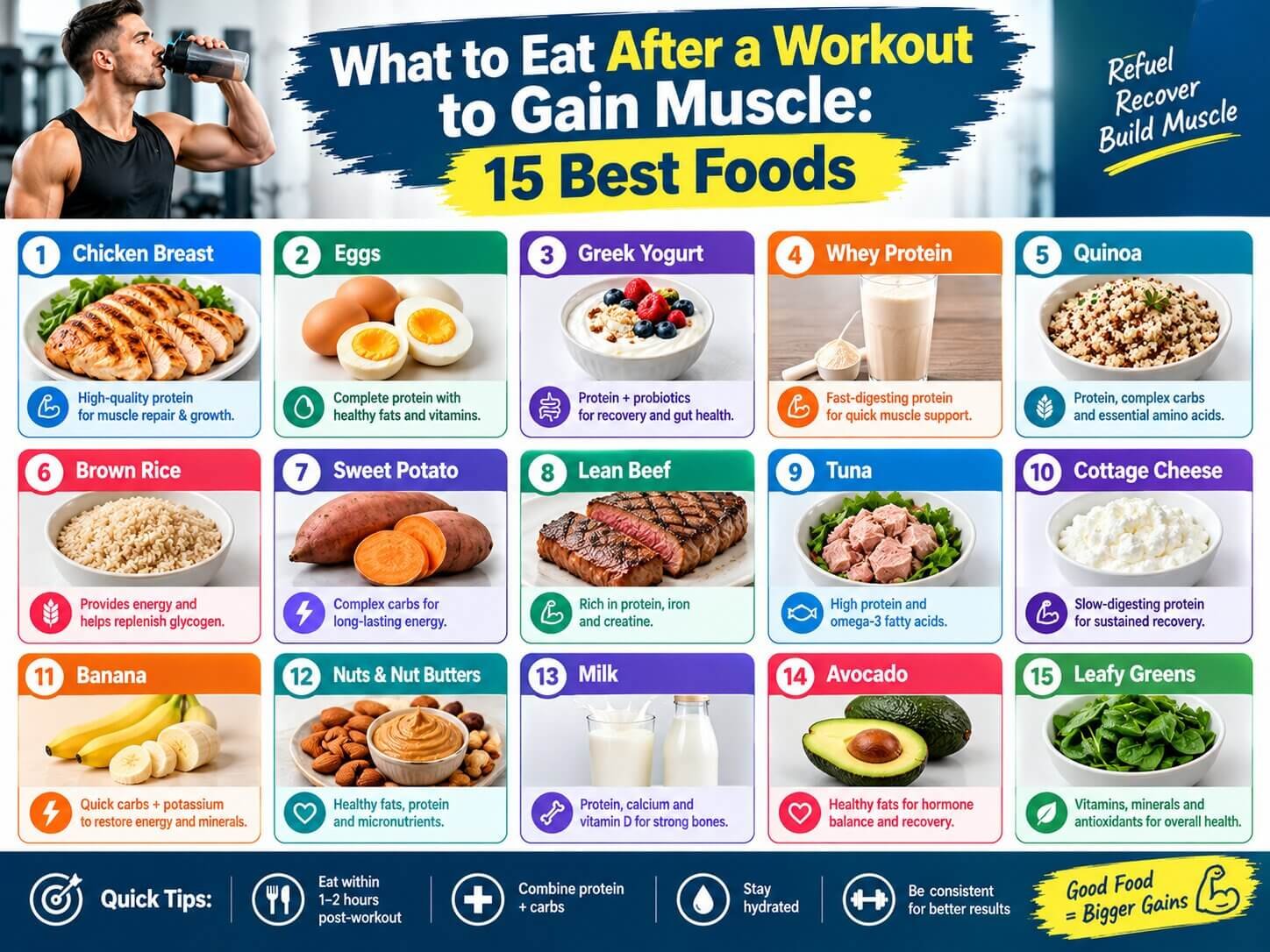
15 Best Foods to Eat After a Workout
The best muscle recovery foods are foods you tolerate, enjoy, and can eat consistently. The list below includes both animal and plant protein sources plus carbohydrate foods that make balanced meals easier.
1. Eggs
Eggs provide complete protein and work at breakfast, lunch, or dinner. Pair them with wholegrain toast, potatoes, oatmeal, fruit, or vegetables to create a fuller recovery meal.
Easy meal: Eggs, toast, fruit, and milk or soy milk.
2. Chicken
Chicken is a versatile source of lean protein. It pairs easily with rice, potatoes, pasta, wraps, or bread.
Easy meal: Chicken, rice, mixed vegetables, and olive oil.
3. Turkey
Turkey works well in sandwiches, wraps, bowls, or pasta. Leftover roasted turkey can make a quick post-workout lunch.
Easy meal: Turkey and cheese wrap with fruit.
4. Salmon
Salmon supplies complete protein and unsaturated fat. Add rice, potatoes, or bread when carbohydrate replacement is also a priority.
Easy meal: Salmon, roasted potatoes, and vegetables.
5. Tuna or Sardines
Canned fish is affordable, portable, and requires little preparation. Choose lower-sodium versions when needed and vary seafood choices over the week.
Easy meal: Tuna sandwich with fruit and yogurt.
6. Greek Yogurt or Skyr
Greek yogurt and skyr are convenient post-workout protein foods. They are easy to combine with oats, granola, berries, bananas, nuts, or seeds.
Easy meal: Greek yogurt, oats, berries, and a spoonful of nut butter.
7. Cottage Cheese
Cottage cheese provides dairy protein and works well after an evening workout. Pair it with fruit, toast, potatoes, or crackers.
Easy meal: Cottage cheese, banana, whole-grain toast, and cinnamon.
8. Milk
Milk provides protein, carbohydrates, fluid, and several micronutrients in one drink. Research reviews suggest milk can support postexercise muscle protein synthesis and rehydration. (James et al., 2019)
Easy meal: Milk blended with yogurt, oats, and fruit.
9. Lean Beef
Lean beef supplies complete protein, iron, zinc, and vitamin B12. Use it as one option within a varied diet rather than relying on it at every meal.
Easy meal: Lean beef, potatoes, and mixed vegetables.
10. Tofu
Tofu is a complete soy protein and a practical base for vegan and dairy-free meals. Firm tofu works in stirfries, bowls, wraps, and scrambles.
Easy meal: Tofu stirfry with rice and vegetables.
11. Tempeh or Edamame
Tempeh and edamame provide soy protein along with other nutrients. They can increase the protein content of noodles, rice bowls, and salads.
Easy meal: Tempeh, noodles, edamame, and vegetables.
12. Beans, Lentils, and Chickpeas
Legumes provide protein, carbohydrates, fiber, and minerals. Because a normal serving may contain less protein than a large serving of meat or dairy, combine legumes with grains, tofu, soy milk, or another protein-rich food when needed.
Easy meal: Lentil curry with rice and soy yogurt.
13. Rice and Potatoes
Rice and potatoes are easy-to-digest carbohydrate choices for replenishing training fuel. They become a complete recovery meal when paired with protein and vegetables.
Easy meal: Baked potato topped with cottage cheese and beans.
14. Oats
Oats provide carbohydrates, fiber, and some protein. Add milk, soy milk, Greek yogurt, or protein powder to turn oatmeal into a high-protein post-workout breakfast.
Easy meal: Oatmeal cooked with milk and topped with yogurt and berries.
15. Fruit
Bananas, berries, oranges, apples, mango, and pineapple provide carbohydrates, fluid, vitamins, and minerals. Fruit works best as the carbohydrate component of a snack rather than the only recovery food.
Easy meal: Banana with Greek yogurt and wholegrain cereal.
Easy Post-Workout Meals for Muscle Growth
A useful recovery meal can be simple, affordable, and made from foods already in your kitchen. Adjust serving sizes to your appetite, training demand, and dietary needs.
| Meal | Protein source | Carbohydrate source | Best use |
|---|---|---|---|
| Chicken rice bowl | Chicken | Rice and vegetables | Lunch or dinner |
| Eggs, toast, and fruit | Eggs and optional milk | Toast and fruit | Postworkout breakfast |
| Greek yogurt bowl | Greek yogurt or skyr | Oats, granola, and berries | Quick meal or snack |
| Salmon and potatoes | Salmon | Potatoes | Postworkout dinner |
| Tofu stirfry | Tofu and edamame | Rice or noodles | Vegan or dairy-free meal |
| Lentil grain bowl | Lentils plus tofu or soy yogurt | Rice or quinoa | Budget vegetarian meal |
| Tuna sandwich | Tuna | Wholegrain bread and fruit | Fast lunch |
| Recovery smoothie | Milk, yogurt, soy milk, or protein powder | Fruit and oats | Low appetite or limited time |
| Cottage cheese bowl | Cottage cheese | Fruit and toast | Evening snack |
| Turkey wrap | Turkey and optional cheese | Wholegrain wrap | Portable meal |
| Bean and egg burrito | Eggs and beans | Tortilla and beans | Budget breakfast or lunch |
| Pasta with chicken or tempeh | Chicken or tempeh | Pasta | Higher-demand training day |
Quick postworkout snacks
Choose a snack when a full meal is not practical or when dinner is still several hours away:
- Greek yogurt with banana
- Cottage cheese with fruit and toast
- Milk or fortified soy milk with a peanut butter sandwich
- Tuna and wholegrain crackers
- Hardboiled eggs with fruit and bread
- Edamame with rice cakes and fruit
- A protein shake with oats or a banana
Nuts and nut butter are nutritious, but they are not especially protein-dense compared with dairy, soy, eggs, fish, or poultry. Use them as an addition rather than the only protein source when muscle recovery is the goal.
Budget post-workout foods
Affordable recovery staples include eggs, milk, canned tuna, dried or canned beans, lentils, rice, oats, potatoes, peanut butter, frozen vegetables, and seasonal fruit. Buying store brands, cooking larger batches, and freezing portions can reduce cost without reducing nutritional value.
What to eat after an evening workout
A late post-workout meal is acceptable. Choose something comfortable enough that it does not disrupt sleep, such as Greek yogurt with oats, cottage cheese with fruit and toast, eggs with potatoes, or tofu with rice.
If you already ate dinner shortly before training, a small protein-containing snack may be enough. If the workout replaced dinner, eat a normal balanced meal rather than going to bed hungry because of the clock.
What to eat when you have no appetite
Liquid or softer foods may be easier after an intense workout. Try a smoothie made with milk or fortified soy milk, yogurt or protein powder, fruit, and oats. Sip it slowly rather than forcing a large meal.
Persistent nausea, vomiting, dizziness, or inability to eat after routine exercise is not something to solve with meal timing alone. Reduce training intensity and speak with a qualified healthcare professional.
Whole Foods vs. a Protein Shake After Exercise
Whole foods should form the foundation of your diet, but a protein shake can be useful when you are short on time, traveling, or not hungry enough for a full meal. Neither option is automatically better for muscle growth if both provide sufficient high-quality protein.
| Wholefood meal | Protein shake |
|---|---|
| Provides protein plus a broader mix of nutrients | Fast and convenient |
| Usually more filling | Easier when appetite is low |
| Encourages dietary variety | Portable and easy to measure |
| May require preparation | Can help fill a dietary gap |
| Best as the dietary foundation | Optional, not required |
You can build muscle without protein powder. The NIH advises that supplements should add to, not replace, a sound diet and warns that multi-ingredient performance products may contain poorly studied combinations or undeclared ingredients. (NIH Office of Dietary Supplements)
If you use protein powder, choose a product with a short ingredient list and independent third-party testing. People under 18 should not use performance supplements without guidance from a parent or guardian and a qualified healthcare professional.
Are BCAAs, Chocolate Milk, or Creatine Necessary?
None of these is required for a postworkout meal. Complete protein foods already provide branched-chain amino acids, chocolate milk is simply one convenient mixed recovery drink, and creatine works through consistent use rather than a special postworkout window.
BCAAs
BCAA supplements are usually unnecessary when your diet already supplies enough complete protein. Leucine helps initiate muscle protein synthesis, but all essential amino acids are needed to build new muscle protein. The NIH reports limited evidence that isolated BCAAs improve performance or muscle growth beyond adequate dietary protein. (NIH Office of Dietary Supplements)
Chocolate milk
Chocolate milk contains protein, carbohydrates, fluid, and sodium, so it can be a practical recovery drink after demanding exercise. It is an option, not a uniquely superior food. Regular milk with a meal, yogurt and fruit, or fortified soy milk with oats can fill a similar role.
Creatine
Creatine monohydrate can support strength and training adaptations in some adults, but it does not need to be taken immediately after a workout. Research has not established a clearly superior timing strategy. Supplements also deserve extra caution because quality, medication interactions, medical conditions, and age affect safety. (Kreider et al., 2017)
Common PostWorkout Nutrition Mistakes
The biggest mistakes come from overestimating meal timing and underestimating the basics of training, total diet, and recovery.
1. Treating the anabolic window as a 30-minute deadline
Eating promptly can be useful, especially after fasted training, but you do not lose your workout if a meal is delayed. Consider what you ate before training and focus on a reasonable meal pattern across the day.
2. Drinking a shake but skipping regular meals
A shake cannot compensate for a consistently low-quality diet. Muscle growth also requires enough food, carbohydrates for training, micronutrients, and regular meals.
3. Eating protein without enough training stimulus
Protein supports adaptation; it does not replace resistance training. Follow a progressive program that gradually adds repetitions, resistance, sets, or exercise difficulty while allowing recovery.
4. Choosing fruit alone
Fruit contributes useful carbohydrates and micronutrients, but it contains little protein. Pair it with dairy, soy, eggs, poultry, fish, tofu, or another meaningful protein source.
5. Avoiding all carbohydrates
Low carbohydrate availability can make demanding training feel harder and may reduce your ability to sustain volume. Match carbohydrate intake to your training demands instead of treating carbs as automatically harmful.
6. Relying on BCAAs or “muscle-building” blends
Many products cost more than whole foods or a basic protein powder without providing better results. Some bodybuilding supplements may also contain hidden or steroid-like substances. The FDA specifically warns that products marketed for bodybuilding are among those at risk of adulteration. (U.S. Food and Drug Administration)
7. Ignoring fluids
Even a balanced meal does not replace water lost through sweat. Drink during the hours after training and include sodium-containing foods after long, hot, or very sweaty sessions.
8. Expecting one food to cause muscle growth
No food can guarantee hypertrophy. Results depend on the combined effect of progressive resistance training, adequate nutrition, sleep, genetics, health status, and time.
Practical Post-Workout Checklist
Before calling your recovery nutrition complete, ask:
- Did I include a clear protein source?
- Did I add carbohydrates that match the difficulty and length of the session?
- Did I drink enough fluid?
- Does the meal include fruit or vegetables?
- Is the meal comfortable to digest?
- Can I repeat this pattern consistently?
- Am I eating protein at other meals, not only after training?
- Is my training program progressing while still allowing recovery?
If most answers are yes, your post-workout nutrition is likely doing its job.
Why You May Not Be Gaining Muscle Despite Eating Protein
Protein is only one part of the muscle-growth process. A stalled result may reflect an inconsistent training stimulus, insufficient overall food intake, poor sleep, unrealistic expectations, or a health issue, not necessarily the need for more powder.
Review these areas:
- Training progression: Are repetitions, resistance, technique, or training volume improving over time?
- Consistency: Are you training the target muscles regularly for months, not just a few sessions?
- Overall nutrition: Are regular meals providing enough protein, carbohydrates, and dietary variety?
- Recovery: Are you scheduling rest and getting adequate sleep?
- Measurement: Are you tracking strength, repetitions, and exercise quality rather than judging progress only by appearance?
Speak with a physician or registered dietitian if you have unexplained fatigue, digestive symptoms, a medical condition, a history of disordered eating, or difficulty meeting nutritional needs.
Frequently Asked Questions
What should beginners eat after lifting weights?
Beginners should eat a normal balanced meal with quality protein, carbohydrates, and fluid. Eggs with toast and fruit, chicken with rice and vegetables, or tofu with noodles are all effective options.
How much protein should you eat after exercise?
A commonly researched range for healthy exercising adults is 20–40 grams of high-quality protein. The right amount varies with body size, age, workout size, and total daily protein intake, so it should not be treated as a universal prescription.
Should you eat immediately after working out?
You do not need to eat immediately if you had a protein-rich meal shortly before training. Eat sooner if you trained fasted or it has been several hours since your last meal.
Is rice good after lifting weights?
Yes. Rice is a practical source of carbohydrates that helps replenish muscle glycogen. Pair it with chicken, fish, eggs, tofu, tempeh, beans, or another protein source.
Is a banana enough after a workout?
A banana provides carbohydrates and potassium but little protein. Pair it with Greek yogurt, milk, soy milk, cottage cheese, eggs, or a protein shake when muscle recovery is the goal.
Are eggs good after strength training?
Yes. Eggs supply complete protein and other nutrients. Combine them with toast, potatoes, oatmeal, fruit, or vegetables for a balanced recovery meal.
Can you build muscle without a protein shake?
Yes. Protein powder is optional. Eggs, dairy, fish, poultry, lean meat, soy foods, beans, and lentils can provide enough dietary protein when eaten in suitable amounts across the day.
What is a good vegan post-workout meal?
Try a tofu and edamame rice bowl, tempeh with noodles, or lentil curry with rice and fortified soy yogurt. Using soy foods or a blend of plant proteins makes it easier to obtain enough essential amino acids.
What is a good dairy-free post-workout meal?
Chicken with potatoes, tuna with rice, eggs with toast, or tofu with noodles are all dairy-free. For a smoothie, use fortified soy milk and a soy or blended plant protein if needed.
What should you eat after a home workout?
Use the same basic formula as after a gym session: protein, carbohydrates, produce, and water. A regular meal is usually enough after a moderate home workout; specialized recovery products are unnecessary.
Do carbohydrates directly build muscle?
Carbohydrates do not provide the amino acids used to build muscle tissue. They support the process indirectly by replenishing glycogen, fueling training, and helping you meet energy needs.
Is it okay to eat a postworkout meal at night?
Yes. A late meal does not cancel muscle growth. Choose a portion and food combination that supports recovery without causing digestive discomfort or disrupting sleep.
Safety and Individual Considerations
This guidance is intended for generally healthy adults and is not medical nutrition therapy. Protein and fluid needs can differ for people with kidney disease, diabetes, gastrointestinal disorders, food allergies, pregnancy, or other medical concerns.
Children and teenagers have growth and development needs that differ from adult sports nutrition research. Young athletes should prioritize regular meals and speak with a parent or guardian, pediatrician, or registered dietitian before using protein powders, creatine, or other performance supplements.
Conclusion
The best answer to what to eat after a workout to gain muscle is not a single food. Build a meal from quality protein, useful carbohydrates, fruit or vegetables, and fluid. Eat within a few hours, or sooner after fasted training, without stressing over a narrow anabolic window.
Chicken and rice, eggs and toast, Greek yogurt and oats, salmon and potatoes, and tofu with noodles all support the same goal. Choose the option that fits your diet, budget, appetite, and schedule, then repeat the basics: progressive resistance training, balanced meals, hydration, and sleep.
CTA: Choose one meal and one quick snack from this guide, add them to your next grocery list, and use them as reliable post-workout defaults this week.