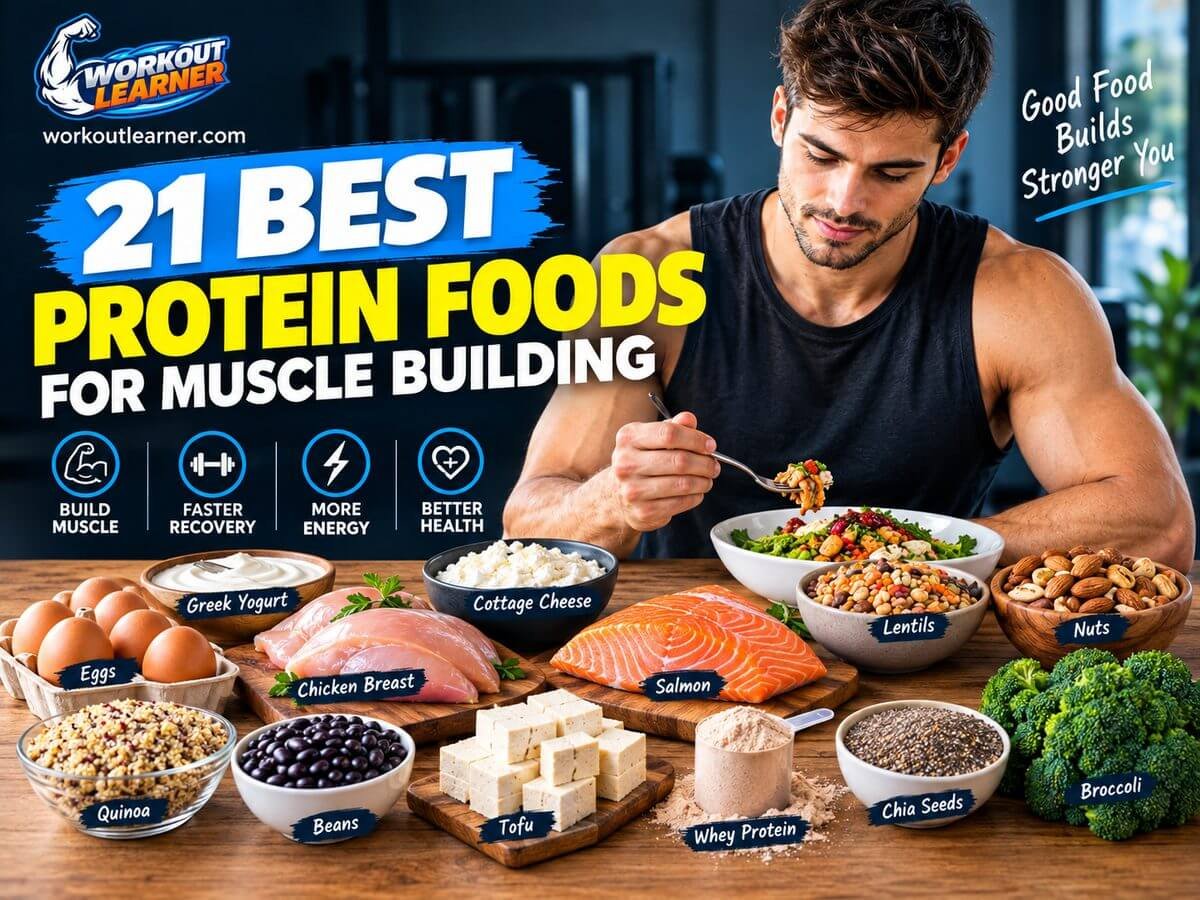
Protein supplies the amino acids your body uses to repair and build muscle after resistance training. The most useful choices are not limited to one “perfect” food: chicken, eggs, fish, Greek yogurt, cottage cheese, lean meat, soy foods, lentils, beans, and other protein-rich staples can all contribute.
The larger goal is to eat enough protein across the day while also getting carbohydrates, dietary fats, fruits, vegetables, and sufficient overall food. Protein supports the training response; it does not replace progressive strength training, recovery, or a balanced diet.
What makes a protein food good for muscle building?
A useful muscle-building food provides a meaningful amount of protein, all or most essential amino acids, good digestibility, and nutrients that support overall health. It should also fit your budget, food preferences, digestion, and normal routine.
Dietary protein is made of amino acids. Nine are considered essential because the body cannot make enough of them on its own. Leucine is one of the essential amino acids involved in signaling muscle protein synthesis, the process of building new muscle protein. However, leucine works as part of a complete supply of essential amino acids, not as a substitute for adequate protein. The International Society of Sports Nutrition position stand explains the roles of protein quality, essential amino acids, and leucine in the response to exercise.
Animal proteins generally contain all essential amino acids in favorable proportions. Soy is also a complete protein. Other plant foods may contain lower amounts of one or more essential amino acids, but you do not need to combine “complementary proteins” at every meal. Eating enough total protein from varied foods across the day is the more practical approach.
Use these five criteria when comparing foods:
- Protein per usual serving: A food may look protein-rich per 100 grams but provide little protein in the amount people normally eat.
- Protein quality: Consider the essential amino acid profile and digestibility.
- Nutrient package: Fish provides omega-3 fats; dairy supplies calcium; legumes add fiber, folate, and minerals; and lean meat provides iron, zinc, and vitamin B12.
- Preparation: Baked chicken and heavily breaded fried chicken are not nutritionally identical.
- Practicality: A food only helps if it is affordable, available, enjoyable, and easy enough to eat regularly.
The Dietary Guidelines for Americans, 2025–2030, recommend variety across eggs, poultry, seafood, red meat, beans, peas, lentils, nuts, seeds, and soy rather than depending on a single category.
Protein content at a glance
The values below are rounded estimates from standard food composition data. Protein varies by brand, cut, water content, serving size, and preparation, so check the Nutrition Facts label when precision matters. USDA FoodData Central is the primary U.S. database for detailed nutrient values.
| Food | Common serving | Approximate protein | Why it is useful |
|---|---|---|---|
| Chicken breast, cooked | 3 oz | 25–27 g | Lean, protein-dense, easy to meal prep |
| Turkey breast, cooked | 3 oz | 24–26 g | Lean and versatile |
| Lean beef or sirloin, cooked | 3 oz | 21–24 g | Protein, iron, zinc, vitamin B12 |
| Pork tenderloin, cooked | 3 oz | 21–23 g | Lean cut with B vitamins |
| Salmon, cooked | 3 oz | 21–23 g | Protein plus omega-3 fats |
| Canned light tuna, drained | 3 oz | 20–22 g | Convenient and shelf-stable |
| Shrimp, cooked | 3 oz | 19–21 g | Lean seafood protein |
| Eggs | 2 large | 12–13 g | Complete protein plus choline |
| Plain Greek yogurt | 6 oz | 15–18 g | Convenient dairy protein and calcium |
| Cottage cheese | ½ cup | 12–14 g | Casein-rich dairy protein |
| Milk | 1 cup | About 8 g | Whey and casein plus calcium |
| Skyr | 5–6 oz | 15–18 g | Thick, high-protein cultured dairy |
| Firm tofu | ½ cup | About 10–20 g | Complete plant protein; brands vary widely. |
| Tempeh | ½ cup | About 15–17 g | Fermented soy protein with fiber |
| Shelled edamame, cooked | 1 cup | About 18 g | Complete protein plus fiber |
| Lentils, cooked | 1 cup | About 18 g | Affordable protein, fiber, and iron |
| Chickpeas, cooked | 1 cup | About 14–15 g | Versatile legume for bowls and salads |
| Black beans, cooked | 1 cup | About 15 g | Budget-friendly protein and fiber |
| Soy milk | 1 cup | About 7–9 g | Useful dairy alternative; choose fortified. |
| Pumpkin seeds | 1 oz | About 8–9 g | Protein, healthy fats, and minerals |
| Peanut butter | 2 tbsp | About 7–8 g | Affordable, but more fat-dense than protein-dense |
| Quinoa, cooked | 1 cup | About 8 g | Complete protein, though mainly a carbohydrate food |
A note about “high-protein” nuts, seeds, and grains
Nuts, seeds, peanut butter, quinoa, and oats contribute useful protein, but they are not as protein-dense as lean poultry, seafood, Greek yogurt, cottage cheese, or many soy foods. Nuts and seeds are primarily sources of dietary fat, while quinoa and oats provide mostly carbohydrate.
That does not make them poor foods. It means they work better as supporting ingredients than as the only protein in a muscle-building meal. For example, oatmeal with peanut butter becomes more protein-rich when paired with milk, Greek yogurt, eggs, or soy milk.
The best animal protein foods for muscle building
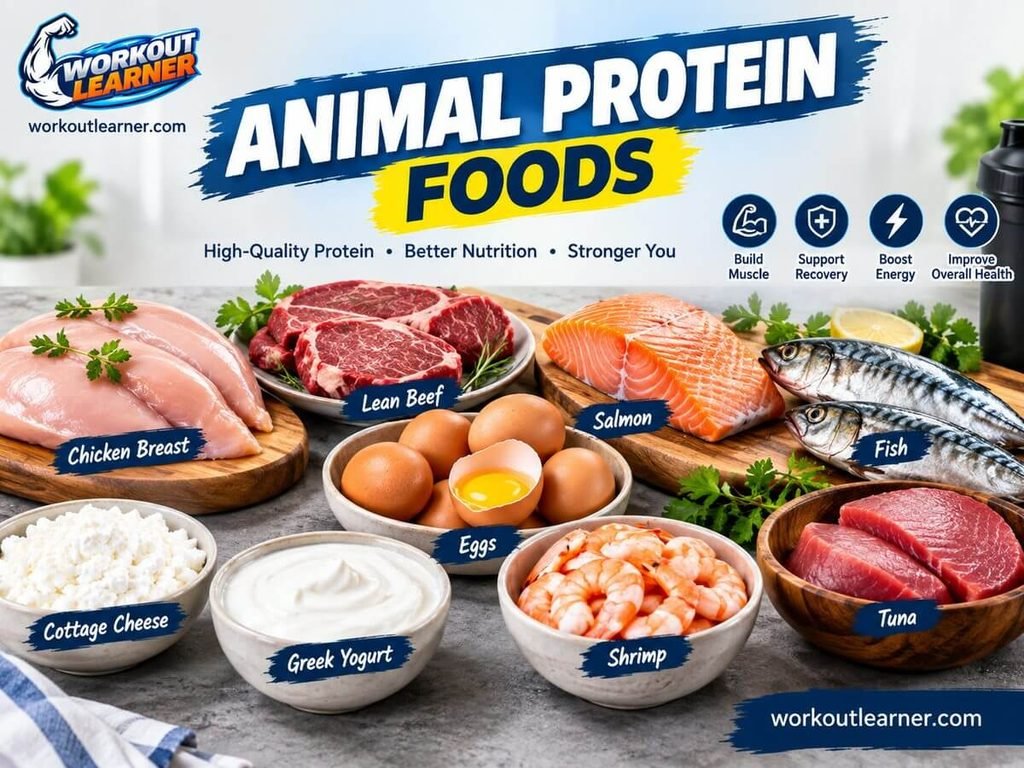
Animal foods provide complete protein and are often an easy way to get a substantial amount in one serving. Choose a variety rather than eating the same meat at every meal.
1. Chicken breast
Chicken breast is one of the most protein-dense whole foods and is easy to use in sandwiches, wraps, grain bowls, soups, and stir-fries. A cooked 3-ounce portion provides roughly 25–27 grams of complete protein.
Breast meat is leaner than thighs, but chicken thighs can still fit a nutritious diet. The better choice is often the cut you can afford, prepare well, and eat consistently. Bake, roast, grill, poach, or stir-fry it instead of relying mainly on deep-fried versions.
2. Turkey
Turkey breast and lean ground turkey are practical sources of complete protein. Choose lean ground turkey, since its fat and saturated-fat content can vary by product. Both options work well in burgers, chili, tacos, pasta sauces, and meal-prep bowls.
Buying deli turkey? Check the nutrition label for sodium and added ingredients. Freshly cooked turkey or minimally processed ground turkey usually gives you greater control over the seasoning and overall sodium content.
3. Lean beef
Lean beef offers complete protein along with iron, zinc, and vitamin B12. Looking for leaner options? Sirloin, round cuts, and lean ground beef are practical choices.
Choose minimally processed lean cuts more often than heavily processed meats, and keep portions appropriate for your overall eating pattern. Beef can fit into a balanced diet, but it does not need to be your main protein at every meal.
4. Pork tenderloin
Pork tenderloin is a relatively lean source of complete protein and several B vitamins. It is useful for people who want an alternative to chicken without sacrificing protein density.
Roast a tenderloin once, then use leftovers in sandwiches, rice bowls, or tacos. Other pork products vary widely in fat and sodium, so compare labels rather than treating all pork as equivalent.
5. Salmon
Salmon combines high-quality protein with EPA and DHA omega-3 fatty acids. That makes it valuable for overall nutrient variety, not because omega-3 fats independently guarantee greater muscle growth.
Fresh, frozen, and canned salmon can all work. Canned salmon is often less expensive and shelf-stable.
6. Tuna
Canned tuna is portable, affordable, and requires no cooking. Mix it with Greek yogurt or another preferred dressing and add it to a sandwich, salad, rice bowl, or wholegrain crackers.
Mercury content differs among tuna types. Canned light tuna is on the FDA’s lower-mercury “Best Choices” list, while albacore typically contains more mercury. People who are pregnant or breastfeeding and children should follow the FDA/EPA fish guidance, and everyone benefits from varying seafood choices rather than eating tuna daily.
7. Sardines, trout, cod, and tilapia
Adding different types of fish can bring more variety to your meals while providing complete protein. Sardines and trout also supply omega-3 fats, while cod and tilapia are lean options with a mild flavor.
Need something convenient? Canned sardines are shelf-stable and provide calcium when eaten with their soft, edible bones. Frozen fish can also be more affordable than fresh fish without sacrificing its nutritional value.
8. Shrimp and other shellfish
Shrimp provides substantial protein with relatively little fat. It cooks quickly and works in pasta, tacos, stir-fries, or rice bowls.
Shellfish is a major allergen, so it is unsuitable for anyone with a shellfish allergy. Preparation also matters: grilled or sautéed shrimp differs from heavily breaded, deep-fried shrimp.
9. Whole eggs and egg whites
Eggs provide complete protein along with choline, vitamin B12, and several other nutrients. Two large eggs typically contain about 12–13 grams of protein. Short on time? Eggs are easy to prepare for breakfast, snacks, or quick meals.
Egg whites add protein with little fat, while the yolk contains many of the egg’s micronutrients. A combination such as whole eggs plus extra whites can raise the protein content without removing yolks entirely.
10. Greek yogurt and skyr
Plain Greek yogurt and skyr are convenient, high-protein foods that also provide calcium. Depending on the product, a single container may provide about 15–20 grams of protein.
Compare labels because protein and added sugar vary by brand. Add fruit, oats, nuts, or seeds for a more complete snack or breakfast.
11. Cottage cheese
Cottage cheese is rich in casein, a slowly digested milk protein. It works as a snack, breakfast ingredient, toast topping, or savory side.
Low-sodium products may be useful for people who need to monitor sodium. Lactose-free versions are available for some people with lactose intolerance, although a milk allergy is different and requires avoiding the responsible milk proteins.
12. Milk and kefir
Milk contains both whey and casein protein and supplies calcium and other nutrients. Kefir offers a similar dairy base in a cultured drink.
Choose the fat level and portion that fit the rest of your diet. People who avoid dairy can use fortified soy milk, which generally provides more protein than almond, oat, or rice drinks.
The best plant protein foods for muscle building
Can you build muscle on a plant-based diet? Yes, provided it supplies enough total protein, energy, and essential nutrients. Soy foods such as tofu, tempeh, and edamame are particularly protein-rich. Legumes also contribute protein, fiber, and carbohydrates that help fuel training.
13. Tofu
Tofu is a complete soy protein with a mild taste, so it easily takes on the flavors of marinades, spices, and sauces. Need more protein per ounce? Firm and extrafirm tofu naturally provide more protein per ounce than silken tofu, but the amount can vary considerably between brands. Check the nutrition label for an accurate comparison.
Press firm tofu when you want a drier texture, then bake, air-fry, scramble, or stir-fry it. Calcium-set tofu can also contribute calcium.
14. Tempeh
Tempeh is made from fermented soybeans and usually provides more protein and fiber per serving than many forms of tofu. Its firm texture works well in sandwiches, tacos, curries, and grain bowls.
Tempeh has a distinct flavor. Briefly steaming it before marinating can reduce bitterness and help it absorb seasoning.
15. Edamame and soybeans
Edamame, young soybeans, provides complete protein, fiber, folate, and minerals. Add it to salads, stirfries, noodle dishes, or grain bowls, or eat it as a simple snack.
Frozen shelled edamame is often the easiest option because it cooks in minutes and reduces preparation.
16. Soy milk
Fortified soy milk is one of the most common plant alternatives to dairy milk in protein content. It can be used in oatmeal, cereal, smoothies, and cooking.
Check the label for protein, calcium, vitamin D, and vitamin B12. Other plant drinks may be helpful for taste or allergies, but many contain only one or two grams of protein per cup.
17. Lentils
Lentils are among the most affordable protein-rich foods. One cooked cup provides roughly 18 grams of protein along with fiber, iron, folate, and carbohydrates.
Use lentils in soup, curry, chili, pasta sauce, or grain bowls. Pairing them with grains, dairy, eggs, or soy can make a meal more protein-dense, but the foods do not have to be combined in a precise ratio.
18. Beans
Black beans, kidney beans, and pinto beans each provide roughly 14–16 grams of protein per cooked cup, although the amount varies by type. They are affordable, satisfying, and remarkably versatile. Add them to chili, burritos, salads, soups, or rice bowls for an easy boost of plant-based protein.
Canned beans save time. Draining and rinsing them can reduce some of the sodium. If a sudden increase in beans causes digestive discomfort, increase portions gradually.
19. Chickpeas
Chickpeas provide protein, fiber, and slow-digesting carbohydrates. Use them in curry, salads, grain bowls, roasted snacks, or hummus.
Hummus contributes protein, but a usual serving is small. Treat it as a useful addition rather than the sole protein source in a full meal.
20. Split peas and green peas
Split peas are particularly helpful in hearty soups and provide both protein and fiber. Green peas contain less protein per cup but can still add to the total in pasta, rice, or mixed dishes.
Combining peas with another protein such as tofu, dairy, fish, or poultry can turn a side dish into a more substantial meal.
21. Textured vegetable protein
Textured vegetable protein, often called TVP, is a shelf-stable soy product with a high protein concentration. Rehydrate it and use it in tacos, chili, pasta sauce, or mixed dishes.
Some products contain added sodium or flavorings. Plain TVP lets you control the seasoning and is often inexpensive per gram of protein.
How much protein do you need to build muscle?
For healthy adults, 1.2–1.6 grams of protein per kilogram of body weight per day is a reasonable evidence-based reference range, and consistent resistance training remains essential. Individual needs vary with training, age, total food intake, health, and other factors.
The current Dietary Guidelines for Americans set a general protein goal of 1.2–1.6 g/kg/day. The NIH Office of Dietary Supplements summarizes a wider sports nutrition range of about 1.2–2.0 g/kg/day for athletes, reflecting differences in training demands and expert guidance. A large meta-analysis found that gains from additional protein during resistance training tended to level off around 1.6 g/kg/day in the healthy adults studied, although the confidence interval and individual variation mean this is not a hard biological cutoff. See the NIH exercise and performance fact sheet and the Morton et al. meta-analysis.
For context, an adult who weighs 150 pounds is about 68 kilograms. Multiplying 68 by 1.2–1.6 gives roughly 82–109 grams per day. This is an example, not a prescription.
More protein is not automatically better. Once intake is adequate, additional protein has diminishing returns and may displace carbohydrates, fruits, vegetables, and other useful foods.
Important for younger readers: Children and teenagers have growth needs that differ from adults. A teen athlete should not copy an adult bodybuilding target or begin a restrictive diet. Involve a parent or guardian and seek individualized advice from a pediatrician or registered dietitian, particularly when training hard, avoiding major food groups, or using supplements.
Does protein timing matter?
Protein timing can be useful, but total daily intake and consistent meals matter more than consuming a shake within a few minutes after training. A normal protein-containing meal before or after a workout is usually sufficient.
Resistance exercise makes muscle more responsive to protein for an extended period. Research comparing equal protein doses immediately before versus immediately after training found similar changes in strength and hypertrophy, which argues against a tiny “anabolic window.” See the pre- versus post-exercise trial and the protein-timing meta-analysis.
A practical pattern is
- Include a meaningful protein source at breakfast.
- Add protein at lunch and dinner.
- Use a protein-rich snack when meals are far apart or daily intake would otherwise be low.
- Eat a normal meal containing protein within a few hours before or after training.
How much protein should an adult aim for at each meal? Sports nutrition research often uses a flexible range of about 20–40 grams of high-quality protein. However, individual needs depend on body size, activity level, total daily protein intake, and the rest of the diet. Use this range as a planning guide for adults, not a universal rule or a target for children.
Is protein before bed helpful?
A protein-containing evening snack can help someone reach their daily needs, and slowly digested foods such as cottage cheese or Greek yogurt are convenient choices. The benefit is more likely to come from improving total intake and distribution than from a unique food that works only at bedtime.
If eating late causes reflux or disrupts sleep, move the food earlier; consistency and comfort matter.
Animal versus plant protein for muscle growth
Neither category is universally best. Animal protein is often more concentrated and naturally rich in essential amino acids, while plant foods contribute fiber, phytochemicals, and dietary variety. A well-planned diet can use either or both.
Some meta-analyses report a small average advantage of animal protein for lean mass outcomes, especially in younger adults. However, trials in which plant and animal diets provide similarly high total protein have found comparable muscle-building responses. This suggests that protein amount, source selection, and overall diet can narrow the difference. See the 2021 systematic review, a protein-matched vegan versus omnivorous trial, and a 2023 controlled study.
| Factor | Animal protein | Plant protein |
|---|---|---|
| Essential amino acids | Usually complete and concentrated | Soy is complete; other foods vary. |
| Digestibility | Generally high | Varies; processing and preparation can help. |
| Protein per serving | Often high in lean meat, fish, eggs, and dairy | Highest in soy foods, legumes, seitan, and isolates |
| Other nutrients | B12, iron, zinc, calcium, and omega-3s vary by food. | Fiber, folate, magnesium, and phytochemicals vary by food. |
| Dietary considerations | Saturated fat, sodium, allergies, ethics, and cost | Fiber tolerance, volume of food, B12 planning, allergies, and cost |
How to make plant-based protein more effective
Use several of these strategies:
- Make soy foods, lentils, beans, peas, and seitan major proteins rather than depending mainly on nuts.
- Eat varied grains, legumes, nuts, seeds, and soy across the day.
- Include a meaningful plant-protein source at each main meal.
- Choose fortified foods or professional guidance for nutrients that require special attention in vegan diets, especially vitamin B12.
- Increase legumes and fiber gradually if you are not used to them.
Whole foods versus protein powder
Whole foods should form the foundation because they provide protein along with vitamins, minerals, fats, carbohydrates, or fiber. Protein powder is an optional convenience tool when food alone is impractical.
| Whole foods | Protein powder |
|---|---|
| Broader nutrient package | Concentrated protein |
| Often more filling | Fast and convenient |
| Supports food variety | Useful for low appetite or busy periods |
| May require cooking or refrigeration | Easy to transport as dry powder |
| Can be inexpensive when using eggs, dairy, beans, or lentils | Cost and quality vary. |
Whey, casein, soy, and blended plant protein powders can all contribute. Collagen is not an equivalent replacement for a complete muscle-building protein because its essential amino acid profile is limited.
The NIH notes that athletes can obtain sufficient protein from ordinary foods and that supplements should add to, not replace, a nutritionally adequate diet. It also advises against performance supplements for young athletes. If an adult chooses a powder, a short ingredient list and independent third-party certification can reduce, but not eliminate, quality concerns. See the NIH supplement guidance.
Simple protein-rich meals for muscle building
A useful muscle-building meal combines a primary protein with a carbohydrate source and produce. This supports protein intake, training energy, and overall diet quality without requiring complicated recipes.
High-protein breakfast ideas
- Greek yogurt or skyr with oats, berries, and pumpkin seeds
- Eggs and egg whites with wholegrain toast and fruit
- Oatmeal cooked with milk or soy milk, served with Greek yogurt
- Tofu scramble with potatoes and vegetables
- Cottage cheese with fruit and whole-grain toast
Easy lunch and dinner ideas
- Chicken, rice, and roasted vegetables
- Salmon, potatoes, and a green vegetable
- Turkey and bean chili with a side salad
- Tofu stirfry with rice and mixed vegetables
- Lentil pasta sauce with whole-grain pasta and vegetables
- Tuna and white bean salad in a whole grain wrap
- Beef and bean burrito bowl with rice, salsa, and vegetables
- Tempeh tacos with black beans and cabbage slaw
High-protein snacks
- Greek yogurt or skyr
- Cottage cheese and fruit
- Hard-boiled eggs with wholegrain crackers
- Edamame
- Milk or fortified soy milk
- Tuna pouch with crackers
- Hummus paired with edamame, yogurt, eggs, or another stronger protein source.
A simple one-day meal framework
This example shows distribution, not a fixed meal plan or a required amount:
| Meal | Protein anchor | Add for balance. |
|---|---|---|
| Breakfast | Eggs plus Greek yogurt, or tofu scramble | Oats or toast and fruit |
| Lunch | Chicken, tuna, tofu, or lentils | Rice, potatoes, or bread and vegetables |
| Snack | Cottage cheese, skyr, edamame, or soy milk | Fruit or wholegrain crackers |
| Dinner | Fish, lean meat, tempeh, beans, or TVP | Grains or starchy vegetables and produce |
Change portions based on hunger, body size, training, and professional advice. The purpose is to avoid a common pattern in which most protein appears at dinner while breakfast contains almost none.
How to eat more protein on a budget
The cheapest useful proteins are often eggs, dried beans, lentils, canned fish, milk, store-brand Greek yogurt, tofu, TVP, and larger packs of poultry bought on sale. Cost per serving matters more than a food’s marketing label.
Try these strategies:
- Compare unit prices. Check cost per ounce or pound, not only package price.
- Use legumes regularly. Lentils and beans can replace part of the meat in chili, tacos, soups, and pasta sauce.
- Buy frozen or canned. Frozen fish, canned salmon, canned light tuna, and frozen edamame reduce waste.
- Choose store brands. Yogurt, cottage cheese, milk, beans, and eggs are often similar nutritionally.
- Cook once, use several times. Prepare chicken, lentils, tofu, rice, or chili in batches.
- Freeze extra portions. This prevents spoilage and creates fast future meals.
- Do not pay a “protein” premium unnecessarily. Ordinary foods can outperform expensive bars on cost, fullness, and nutrient variety.
A low-cost grocery starter list
- Eggs
- Dried or canned lentils and beans
- Canned light tuna or salmon
- Milk or fortified soy milk
- Plain Greek yogurt
- Cottage cheese
- Tofu or TVP
- Frozen chicken bought on sale
- Frozen edamame
- Oats, rice, potatoes, and wholegrain bread
- Frozen or seasonal fruits and vegetables
Common protein mistakes that can slow progress
Most protein mistakes involve the overall pattern, not a single “bad” food.
Counting every food as a major protein source
Bread, oats, nuts, seeds, and vegetables add protein, but they may not provide enough by themselves for a protein-centered meal. Remember the main protein anchor first, then count supporting foods as a bonus.
Treating peanut butter as a lean protein
Peanut butter is nutritious and affordable, but most of its energy comes from fat. Pair it with milk, soy milk, Greek yogurt, or another concentrated protein if muscle-building protein is the goal.
Eating almost all protein at dinner
A dinner-heavy pattern makes it harder to reach an adequate daily intake and misses easy opportunities at breakfast and lunch. Add eggs, dairy, soy, fish, poultry, or legumes earlier in the day.
Obsessing over the post-workout window
Rushing to drink a shake while ignoring daily intake, training quality, and normal meals puts a minor detail ahead of the main factors. Plan a convenient meal before or after training instead.
Replacing carbohydrates with protein
Carbohydrates help fuel resistance training and restore muscle glycogen. A muscle-building diet still needs grains, potatoes, fruit, legumes, or other carbohydrate foods based on the person’s needs and preferences.
Assuming protein alone builds muscle
Protein provides building material, but the main training signal comes from progressive resistance exercise. A sensible program gradually increases repetitions, resistance, sets, range of motion, or exercise difficulty while allowing recovery.
Relying on highly processed “protein” products
A front-of-pack protein claim does not guarantee a balanced product. Check serving size, protein, added sugar, saturated fat, sodium, ingredients, cost, and whether the product actually solves a practical need.
Ignoring health conditions
People with chronic kidney disease, certain metabolic disorders, food allergies, digestive disease, or other medical needs may require individualized advice. Do not begin a high-protein diet without discussing it with the clinician or registered dietitian managing the condition.
Practical recommendations for beginners
Start with food habits you can repeat rather than trying to redesign every meal at once.
- Choose three to five primary proteins you already enjoy.
- Put one clear protein anchor in each main meal.
- Add a protein-rich snack only when it helps meet needs or manage a long gap.
- Rotate animal and plant foods for a broader nutrient intake.
- Keep two emergency options available, such as canned tuna, eggs, yogurt, edamame, or ready-to-eat lentils.
- Follow a progressive resistance-training plan scaled to your ability and recovery. For adults, U.S. physical activity guidance recommends muscle-strengthening activity on at least two days each week. Youth guidance differs and emphasizes age-appropriate activity; see the CDC physical activity guidelines.
- Track strength and training performance rather than judging progress only by appearance.
Frequently asked questions
What are the best protein foods for muscle building?
The most practical options include chicken, turkey, lean beef, fish, eggs, Greek yogurt, cottage cheese, milk, tofu, tempeh, edamame, lentils, and beans. The best personal choices are foods that provide substantial protein, fit your diet, and are easy to eat consistently.
Can you build muscle without protein powder?
Yes. Protein powder is not required if whole foods provide enough protein. Eggs, dairy, poultry, fish, meat, soy foods, lentils, and beans can cover daily needs.
What should you eat after a workout?
Eat a normal meal or snack containing protein and carbohydrates within a convenient few-hour window. Examples include Greek yogurt with fruit and oats, chicken with rice, eggs with toast, or tofu with noodles. There is usually no need to consume protein within minutes of finishing.
Is chicken good for building muscle?
Yes. Chicken provides complete, highly digestible protein and is easy to prepare in bulk. The breasts are leaner, while the thighs can still fit depending on the rest of the diet.
Are eggs good for muscle growth?
Yes. Eggs provide complete protein and several micronutrients. Because two eggs provide about 12–13 grams of protein, pair them with dairy, soy, beans, or extra egg whites when a more protein-rich adult meal is desired.
Is Greek yogurt good for building muscle?
Yes. Greek yogurt is rich in dairy protein and calcium and requires no cooking. Choose a product based on its protein, added sugar, fat content, price, and your tolerance.
Can plant protein build muscle?
Yes. A varied plant-based diet can support muscle growth when it provides sufficient total protein, food energy, and essential nutrients. Soy foods, lentils, beans, peas, seitan, and suitable plant-protein powders are more concentrated options.
Are beans complete proteins?
Most beans are lower in one or more essential amino acids relative to animal protein, but they still contribute valuable protein. Eating varied foods across the day supplies complementary amino acids; beans and grains do not need to be combined at the same moment.
Is animal protein better than plant protein?
Animal protein is generally more concentrated in essential amino acids and more digestible, but this does not make it mandatory. Research suggests that well-planned, protein-matched plant diets can produce comparable results, although some analyses find a small average lean-mass advantage for animal protein.
What are the cheapest foods for muscle gain?
Eggs, lentils, beans, milk, canned light tuna, tofu, TVP, store-brand Greek yogurt, and poultry bought in larger packs or on sale are often economical. Local prices vary, so compare cost per usable serving.
Do you need a calorie surplus to build muscle?
Not everyone needs to pursue a surplus deliberately. Beginners and some people returning to training may gain muscle without one, while more experienced lifters often benefit from sufficient overall food and a modest surplus. Avoid aggressive “bulking”; training progress, adequate meals, and gradual change are safer priorities.
Is more protein always better?
No. Benefits diminish after needs are met, and excessive focus on protein can crowd out other nutrients. People with medical conditions affecting protein needs should seek individualized guidance.
Conclusion
The best protein foods for muscle building are the ones that deliver high-quality protein and fit a balanced, sustainable eating pattern. Poultry, seafood, eggs, dairy, lean meat, soy, lentils, and beans all have useful roles.
Build meals around a clear protein source, spread those foods across the day, keep carbohydrates and produce on the plate, and pair the diet with progressive resistance training. Supplements can make protein more convenient, but they cannot replace consistent food habits, training, and recovery.
Next step: Choose two protein-rich breakfasts, two easy lunches, and two dinners from this guide. Add the ingredients to your next grocery list and repeat the meals long enough to learn which options best fit your schedule, budget, and digestion.