
An effective upper-body bodyweight workout at home combines a horizontal push, shoulder-focused push, triceps movement, shoulder-stability exercise, and light upper-back work. Perform the six-movement routine below twice per week, using variations that leave two or three controlled repetitions available at the end of most sets.
The bodyweight-only version requires floor space and a stable wall or counter. However, a balanced upper-body program eventually needs a safe pulling option, such as purpose-built bodyweight equipment, a resistance band, or a securely loaded backpack. Floor exercises cannot fully replace rows or pull-ups.
Upper-Body Bodyweight Workout at a Glance
Complete all sets of one exercise before moving to the next. Straight sets make it easier to practice technique and track progress than a nonstop circuit.
| Exercise | Sets | Repetitions | Main focus |
|---|---|---|---|
| Wall, incline, or floor push-up | 2–3 | 6–15 | Chest, shoulders, triceps |
| Elevated or standard pike push-up | 2 | 6–12 | Shoulders, triceps |
| Prone W raise | 2 | 8–15 | Upper back, rear shoulders |
| Close-grip wall or incline push-up | 1–2 | 8–15 | Triceps, chest |
| Reverse snow angel | 2 | 8–15 | Shoulder-blade control |
| Wall, counter, or floor shoulder tap | 2 | 6–10 per side | Shoulder and trunk stability |
| Program detail | Recommendation |
|---|---|
| Experience level | Beginner to early intermediate |
| Frequency | 2 nonconsecutive days per week |
| Duration | Approximately 20–30 minutes |
| Rest | 60–120 seconds between sets |
| Effort | Finish most sets with 2–3 good repetitions available |
| Progression | Add repetitions, then use a harder variation |
The final two floor exercises offer light upper-back work rather than substantial pulling resistance. For a more balanced session, add one optional row or pull-up variation later in this article.
Can Bodyweight Exercises Strengthen the Upper Body?
Yes. Bodyweight exercises can improve upper-body strength when the selected variations create enough resistance and become progressively harder. Push-ups are particularly easy to scale using a wall, counter, floor, or elevated-feet position.
The American College of Sports Medicine’s 2026 resistance-training guidance recognizes bodyweight exercises and home-based training as effective options. It emphasizes consistent training of the major muscle groups over unnecessarily complicated routines. ACSM resistance-training guidance
A randomized study also found that four weeks of progressively harder calisthenic push-up training improved upper-body strength. The study supports progression within one movement, but it does not mean push-ups alone create a complete upper-body program. Kotarsky et al., 2018
Bodyweight training becomes harder to load precisely as you gain experience. Bands, external loads, or purpose-built calisthenics equipment may eventually make continued progression more practical.
What Muscles Does This Workout Train?
The routine primarily trains the chest, front and side of the shoulders, triceps, and muscles that stabilize the shoulder blades and trunk. The upper back and biceps receive less resistance unless you add a row or pull-up.
| Movement | Main muscles or functions |
|---|---|
| Push-up | Chest, front shoulders, triceps, trunk stability |
| Pike push-up | Shoulders and triceps |
| Close-grip push-up | Triceps with chest and shoulder assistance |
| Prone W raise | Rear shoulders and shoulder-blade muscles |
| Reverse snow angel | Controlled shoulder and shoulder-blade movement |
| Shoulder tap | Shoulder and trunk stability |
| Row or pull-up | Upper back, lats, rear shoulders, biceps |
Calling a routine “upper body” does not guarantee balanced coverage. A program containing only push-up variations may train pressing muscles well while leaving progressive pulling undertrained.
Prepare a Safe Home Setup
Clear enough space to extend your arms without hitting furniture. Use a wall or stable counter for elevated exercises, and confirm that the surface cannot move, slide, or tip.
Avoid dips from light chairs and rows from ordinary tables, doors, bedsheets, or towels. Household objects may fail unexpectedly and are not automatic exercise equipment. Use only purpose-built pulling equipment according to its installation and weight-rating instructions.
Five-Minute Upper-Body Warm-Up
A useful warm-up rehearses the workout at an easier level without creating fatigue. Complete one controlled round.
- March in place while moving your arms for 60 seconds.
- Perform 8 slow shoulder rolls in each direction.
- Perform 6 wall push-ups.
- Perform 6 wall shoulder taps per side.
- Perform 8 standing shoulder-blade squeezes.
- Perform 6 light prone W raises if lying face down is comfortable.
Before the first difficult push-up or pike push-up set, perform several repetitions using a higher hand position or shorter range.
Complete Upper-Body Bodyweight Workout
Choose one variation under each heading and keep it consistent for several sessions. Control the lowering phase and end the set when your position changes.
1. Wall, Incline, or Floor Push-Up
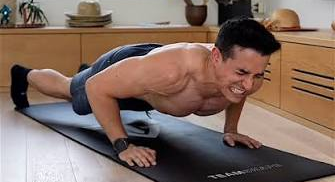
The push-up is the main horizontal press. Place your hands on a stable wall or counter, step back into a straight-body position, lower your chest toward the surface, and press away without letting your hips sag or your shoulders shrug.
Progression: Wall push-up → high-counter push-up → lower incline push-up → floor push-up → feet-elevated push-up.
Use the easiest level that allows 6–15 controlled repetitions with two or three available.
2. Elevated or Standard Pike Push-Up
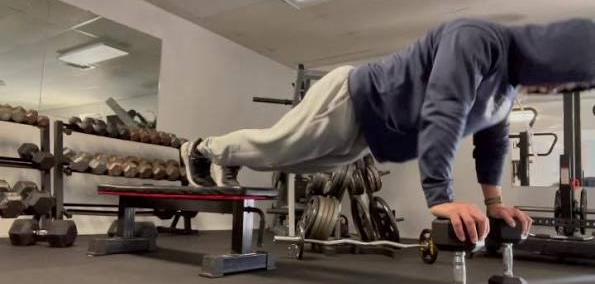
The pike push-up emphasizes the shoulders and triceps. Place your hands on a stable surface, move your hips upward, lower your head toward the space between your hands, and press away through a comfortable range.
Progression: High incline pike press → elevated pike push-up → floor pike push-up → feet-elevated pike push-up.
If the movement causes shoulder discomfort or you cannot control it, perform another incline push-up set instead.
3. Prone W Raise
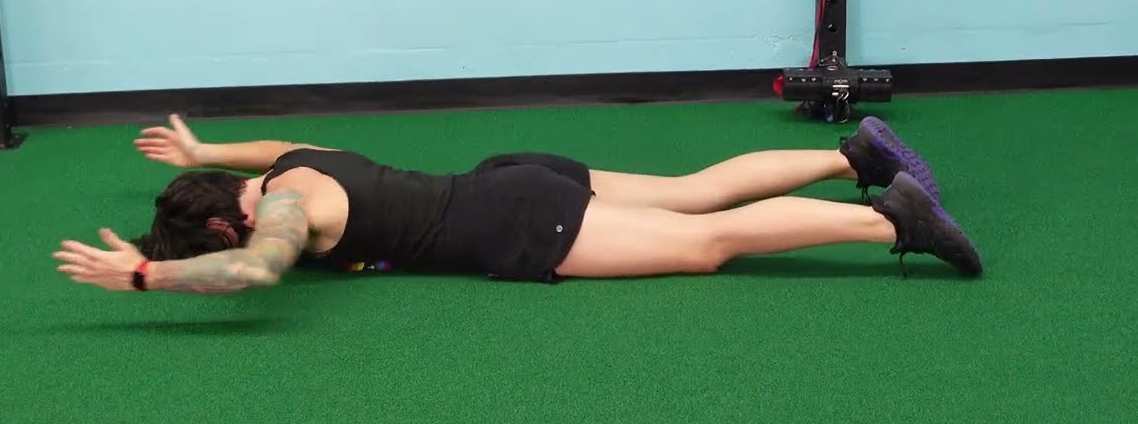
The prone W raise provides light work for the rear shoulders and shoulder-blade muscles. Lie face down with your forehead supported, bend your arms into a W, gently lift your hands and elbows, and then lower without forcing your neck upward.
Progression: Shoulder-blade squeeze with hands down → prone W raise → alternating Y-T-W raises.
4. Close-Grip Wall or Incline Push-Up
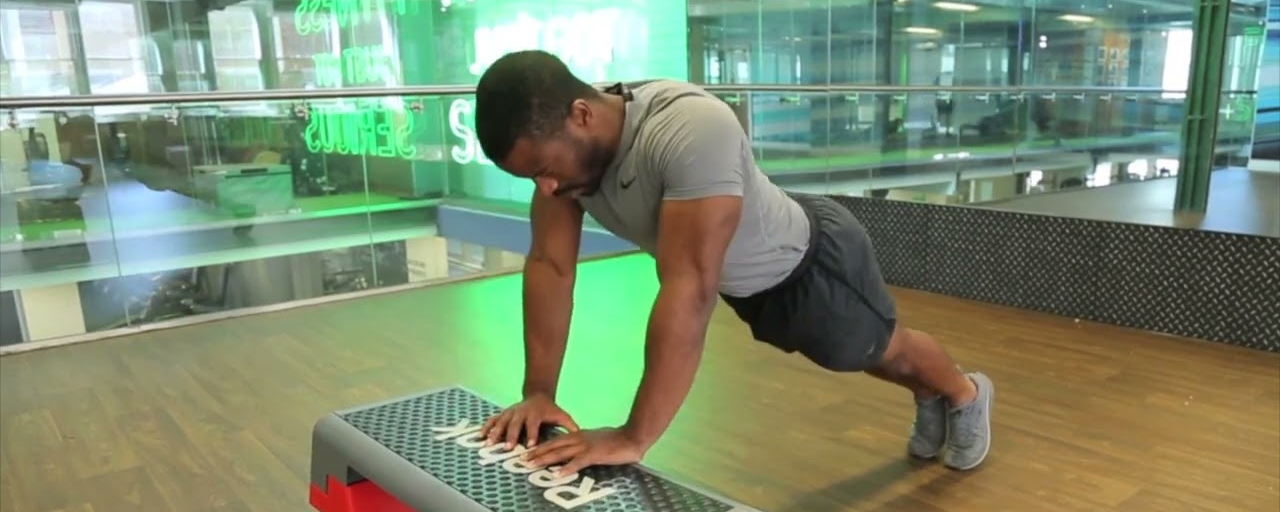
A closer hand position emphasizes the triceps. Place your hands approximately shoulder-width apart, keep your elbows relatively close to your torso, and use an incline that allows comfortable, controlled repetitions.
Progression: Close-grip wall push-up → close-grip incline push-up → close-grip floor push-up.
5. Reverse Snow Angel
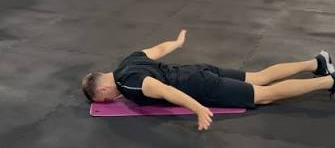
Reverse snow angels provide very light resistance. Lie face down, move your arms in a wide arc overhead, and then return without shrugging or forcing the range. Treat them as accessories, not row substitutes.
Use a shorter range or keep your hands in contact with the floor if lifting the arms is uncomfortable.
6. Wall, Counter, or Floor Shoulder Tap
Shoulder taps train stability while one hand leaves the support. From a wall, incline, or floor plank, touch the opposite shoulder without substantially rotating your hips, then alternate sides.
Progression: Wall shoulder tap → counter shoulder tap → floor shoulder tap with a wide stance → narrower stance.
Move slowly. The goal is controlled stability rather than completing taps as fast as possible.
The Honest Limitation of No-Equipment Pulling
A completely equipment-free home routine cannot easily provide a safe, progressively challenging pulling movement. Prone rows can train shoulder-blade control, but they do not load the upper back and biceps like a row or pull-up.
Do not label Superman raises, arm circles, or shoulder-blade squeezes as equivalent to pulling resistance. They can be useful accessories, but their load and progression options are limited.
For more balanced upper-body training, add one safe option for 2–3 sets of 8–15 repetitions:
- A bodyweight row on properly installed, purpose-built equipment
- An assisted pull-up using a correctly installed bar
- A resistance-band row using the manufacturer’s approved setup
- A one-arm row using a securely loaded backpack or dumbbell
If you do not yet have a pulling option, continue the bodyweight-only routine temporarily and plan to add one when practical. This resistance-band home training guide explains band selection, progression, and setup safety.
Sets, Repetitions, Rest, and Effort
Begin with two sets for the first three exercises and one or two sets for the remaining movements. Use the repetition ranges in the workout table and rest long enough to maintain technique.
Repetitions in reserve, or RIR, estimate how many more good repetitions you could have completed. Finish most sets at approximately 2–3 RIR. The number is an estimate, not a precise test.
Rest 60–120 seconds after most sets. Take longer after demanding push-ups or pike push-ups when another set would otherwise begin with poor control. Short rest can make a session feel harder without necessarily improving the quality of the resistance work.
Should You Use Straight Sets or a Circuit?
Straight sets are the better starting option because they provide practice and recovery between attempts. A circuit is optional after you can perform each movement confidently.
To shorten the session later, alternate a push exercise with light upper-back work—for example, push-ups followed by prone W raises. Avoid pairing several difficult push-up variations without rest, because the same muscles fatigue repeatedly.
Two-Day Weekly Schedule
Train on two nonconsecutive days, such as Monday and Thursday. This schedule gives regular practice while allowing recovery between upper-body sessions.
| Day | Activity |
|---|---|
| Monday | Upper-body bodyweight workout |
| Tuesday | Rest, lower-body training, or manageable cardio |
| Wednesday | Rest or easy activity |
| Thursday | Upper-body bodyweight workout |
| Friday–Sunday | Other training and recovery as appropriate |
The CDC recommends muscle-strengthening activity for all major muscle groups on at least two days per week. Because this workout covers only the upper body, include lower-body training elsewhere in the week. CDC adult activity guidelines
Four-Week Progression Plan
Use the first month to improve movement quality and establish measurable progress. Increase one training variable at a time.
| Week | Plan | Main goal |
|---|---|---|
| 1 | 2 sets for main exercises; 1 set for accessories | Select safe variations and use about 3 RIRs. |
| 2 | 2 sets for most exercises | Add repetitions within each range |
| 3 | Add a third set to push-ups or the optional row if recovered | Increase volume selectively |
| 4 | Maintain sets and progress one exercise variation | Increase difficulty without changing everything |
Do not add a third set merely because Week 3 arrives. Keep the existing workload when soreness persists, repetitions decline, or the routine is becoming difficult to maintain.
How to Progress Without Weights
Progress by adding repetitions within a range, then selecting a slightly harder variation. This approach is easier to track than randomly changing tempo, rest, and exercise selection.
For a push-up prescribed for 2 sets of 6–15:
- Select a height that allows at least six controlled repetitions.
- Add one repetition to one or both sets over future workouts.
- Reach 15 repetitions on both sets with approximately 2 RIR.
- Confirm that performance in the next session.
- Use a slightly lower stable surface and return toward six repetitions.
Record the surface height, variation, sets, repetitions, and approximate RIR. A vague note such as “push-ups felt hard” is less useful than “counter push-up: 12 and 10 repetitions, about 2 RIR.”
Wrist and Shoulder Modifications
Use a higher surface, smaller range, or different exercise when wrist or shoulder position feels uncomfortable. Do not force a movement because it appears in the plan.
- Wrist discomfort: Use a wall or stable counter to reduce the angle and load. Purpose-built push-up handles may provide a more neutral wrist position.
- Shoulder discomfort during push-ups: Use a higher incline, keep the elbows at a comfortable angle, and reduce depth.
- Shoulder discomfort during pike push-ups: Replace them with an extra incline-push-up set or omit them.
- Face-down position uncomfortable: Replace prone movements with gentle standing shoulder-blade movements until an appropriate alternative is available.
Exercise modifications are not treatment for persistent pain. Stop the aggravating movement and seek individualized guidance when symptoms continue or affect normal activity.
Common Mistakes to Avoid
The most common problems are performing only pressing exercises, beginning with advanced variations, and using fatigue as the main measure of success.
Doing Too Many Push-Up Variations
Five different push-ups do not create five different movement patterns. Use one main horizontal push, one shoulder-focused variation, and limited triceps assistance.
Calling Light Floor Movements “Pulling”
Prone W raises and reverse snow angels are useful accessories, but they do not provide the scalable resistance of a row. Add a safe pulling setup when possible.
Starting With Floor or Explosive Push-Ups
Wall walks, clap push-ups, and one-arm variations are unnecessary for beginners. Select a stable incline and progress gradually.
Using Unstable Furniture
Ordinary chairs, tables, doors, and towels may not support exercise forces safely. Do not improvise rows, dips, or elevated movements on unsuitable objects.
Taking Every Set to Failure
Repeated failure training can create unnecessary fatigue and make technique harder to maintain. Keep controlled repetitions available during most beginner sets.
Progressing Everything at Once
Adding repetitions, sets, harder variations, and shorter rest simultaneously makes recovery and progress difficult to evaluate. Change one factor at a time.
Recovery and Safety Guidance
Keep at least one day between upper-body sessions and reduce volume if repetitions or technique decline across workouts. Normal meals, hydration, and sufficient sleep support recovery without requiring a specialized supplement routine.
Temporary muscular effort and mild soreness can occur. Sharp pain, chest pain, faintness, or unusual shortness of breath are not progression signals; stop exercising and seek appropriate medical care for concerning symptoms.
This general routine is not injury rehabilitation. If you have an injury, chronic condition, pregnancy, significant balance concern, or medical exercise restriction, ask a qualified healthcare or exercise professional for individualized guidance.
Practical Recommendations
Start with a push-up height that feels manageable, keep the same exercises for four weeks, and record every working set. Consistency makes progression easier to judge.
- Schedule two nonconsecutive sessions.
- Begin with two sets rather than every optional set.
- Use straight sets and adequate rest.
- Add repetitions before choosing harder variations.
- Add one safe pulling exercise when possible.
- Include lower-body training elsewhere in the week.
- Review the routine after four consistent weeks.
For a whole-body alternative, use this full-body bodyweight workout for beginners. The beginner home workout routine includes dumbbell, band, backpack, and bodyweight options.
Frequently Asked Questions
Is an Upper-Body Bodyweight Workout Effective?
Yes. Bodyweight training can improve pressing strength and muscular endurance when the exercises are challenging and progress over time. Balanced back and biceps development is easier with a safe pulling exercise.
Can Bodyweight Exercises Build Upper-Body Muscle?
They can support muscle growth when working sets create sufficient effort and progressively increase in difficulty. External resistance may eventually make loading the back, biceps, and stronger pressing muscles more practical.
Can I Train My Back Without Equipment?
Prone W raises and reverse snow angels provide light upper-back work, but a true pulling movement requires a suitable load or secure, purpose-built setup. A band, backpack, dumbbell, bar, or suspension trainer is more practical.
What if I cannot perform a floor push-up?
Begin with wall or incline push-ups. Use progressively lower stable surfaces only after reaching the top of the repetition range with controlled technique.
Are Pike Push-Ups Suitable for Beginners?
An elevated or short-range pike push-up can suit some beginners, but it is not mandatory. Substitute another incline push-up if the movement is uncomfortable or too difficult to control.
Can I Train My Upper Body on Consecutive Days?
Avoid consecutive hard sessions at first. Place at least one recovery day between workouts and use the intervening day for lower-body training, manageable cardio, or rest.
When Should I Use a Harder Variation?
Progress after reaching the top of the target repetition range on every set with controlled technique and about two repetitions available. Repeat the result once, then choose the next variation.
Conclusion
An upper-body bodyweight workout at home should be simple enough to repeat and structured enough to progress. Use a scalable push-up, shoulder-focused press, limited triceps assistance, light upper-back work, and a stability exercise twice per week.
The no-equipment version has a genuine limitation: it cannot train pulling as effectively as a row or pull-up. Add a safe pulling setup when practical, avoid unstable furniture, and progress one variable at a time.
Next step: Choose your push-up height, schedule two nonconsecutive sessions, and record the variations and repetitions from your first workout.