Pelvic floor exercises for women mainly involve gently contracting, lifting, and then fully relaxing the muscles that support the bladder, uterus, rectum, and other pelvic structures. Kegel exercises are the most familiar form of pelvic-floor muscle training, but effective training is not simply about squeezing harder or doing as many repetitions as possible. Correct contraction, breathing, relaxation, and individual symptoms all matter.
Pelvic-floor muscle training has particularly strong clinical support for women with stress or mixed urinary incontinence. NICE recommends supervised pelvic-floor muscle training for at least three months as first-line treatment in these situations. Pregnancy and childbirth are also important contexts because pelvic-floor function can change before and after delivery.
Important: Pelvic pain, pain during sex, difficulty urinating, a feeling of pelvic heaviness or bulging, persistent leakage, or symptoms that worsen with Kegels deserve professional assessment. Some pelvic-floor problems involve excessive muscle tension or poor relaxation rather than simple weakness.
What Are the Pelvic Floor Muscles in Women?
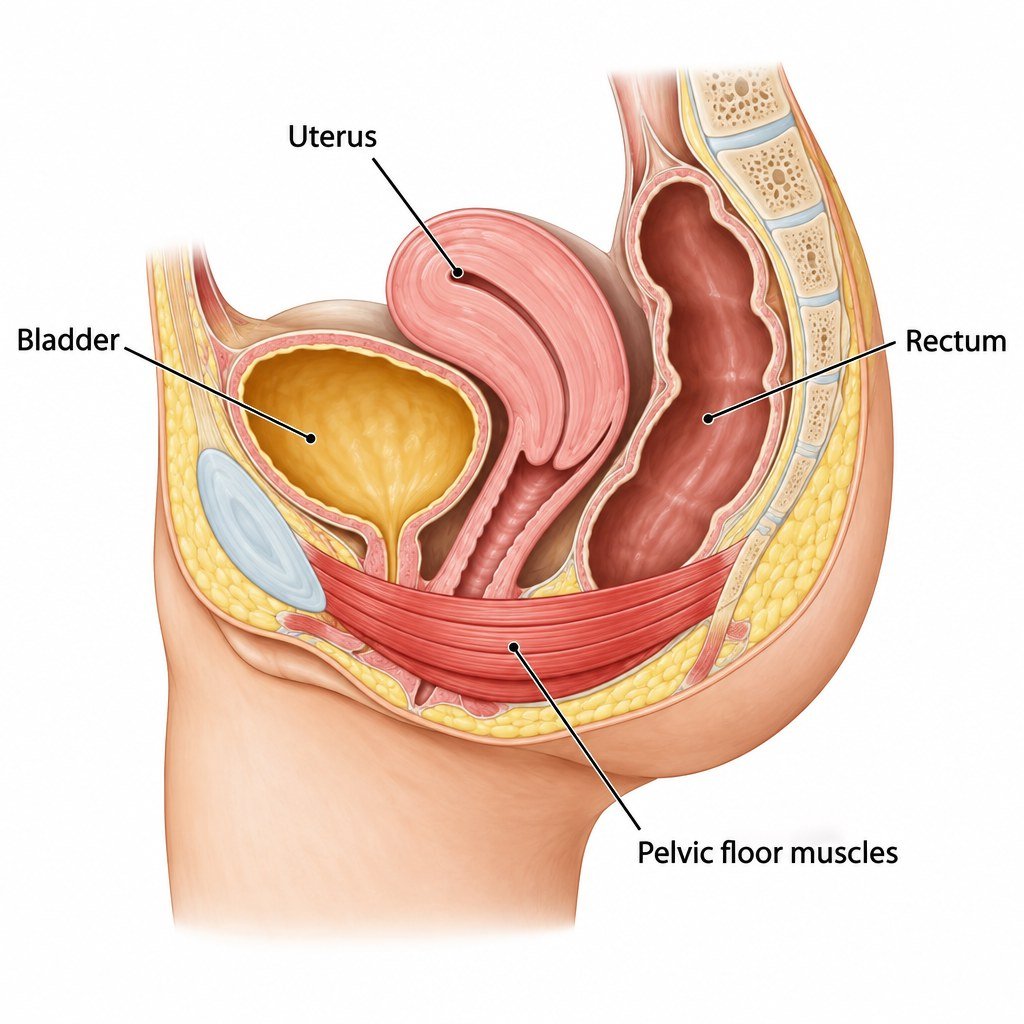
The pelvic floor is a group of muscles and supporting tissues forming the base of the pelvis. These muscles help support the bladder, uterus, and rectum and contribute to urinary, bowel, and sexual function.
The pelvic floor does more than stay tight. It needs to contract when support or continence is required and relax when you urinate, have a bowel movement, and during other activities. That is why useful pelvic-floor training includes both contraction and relaxation.
What Can Affect Pelvic Floor Function?
Pelvic-floor function can change for many reasons. Pregnancy, childbirth, aging, surgery, repeated straining from constipation or chronic coughing, and higher body weight are among factors associated with pelvic-floor weakness or pelvic-support problems.
However, weakness is not the only possible problem. Pelvic pain and other pelvic-floor symptoms may involve muscle tension, coordination problems, or other medical conditions. ACOG notes that pelvic-floor physical therapy can be part of treatment for chronic pelvic pain.
What Do Pelvic Floor Exercises Do?
Pelvic-floor muscle training aims to improve the strength, endurance, control, and coordination of the muscles at the base of the pelvis.
For women with stress urinary incontinence or mixed urinary incontinence, NICE recommends supervised pelvic-floor muscle training for at least three months as a first-line treatment.
ACOG also notes that Kegel exercises may improve urinary incontinence and may help support pelvic organs in women with pelvic-support problems.
These exercises are not a guaranteed cure for every bladder, bowel, sexual, or pelvic problem. The cause of the symptom matters.
How to Find Your Pelvic Floor Muscles
A useful way to identify the pelvic floor is to imagine stopping yourself from passing gas and gently stopping urine flow at the same time. You should feel a subtle inward and upward contraction around the vaginal and rectal area rather than a downward push.
Some women find it easiest to learn the contraction while lying down because fewer postural demands compete for attention.
Should You Stop Urine Flow to Find the Muscles?
Stopping urine briefly may help identify the pelvic-floor muscles, but it should not become your regular Kegel routine.
Mayo Clinic advises against repeatedly doing Kegels while emptying the bladder because this can interfere with complete emptying and may increase urinary tract infection risk. Once you recognize the correct muscles, practice away from the toilet.
How to Do Kegel Exercises for Women
A correct Kegel involves gently contracting and lifting the pelvic floor, maintaining normal breathing, and then completely releasing the contraction.
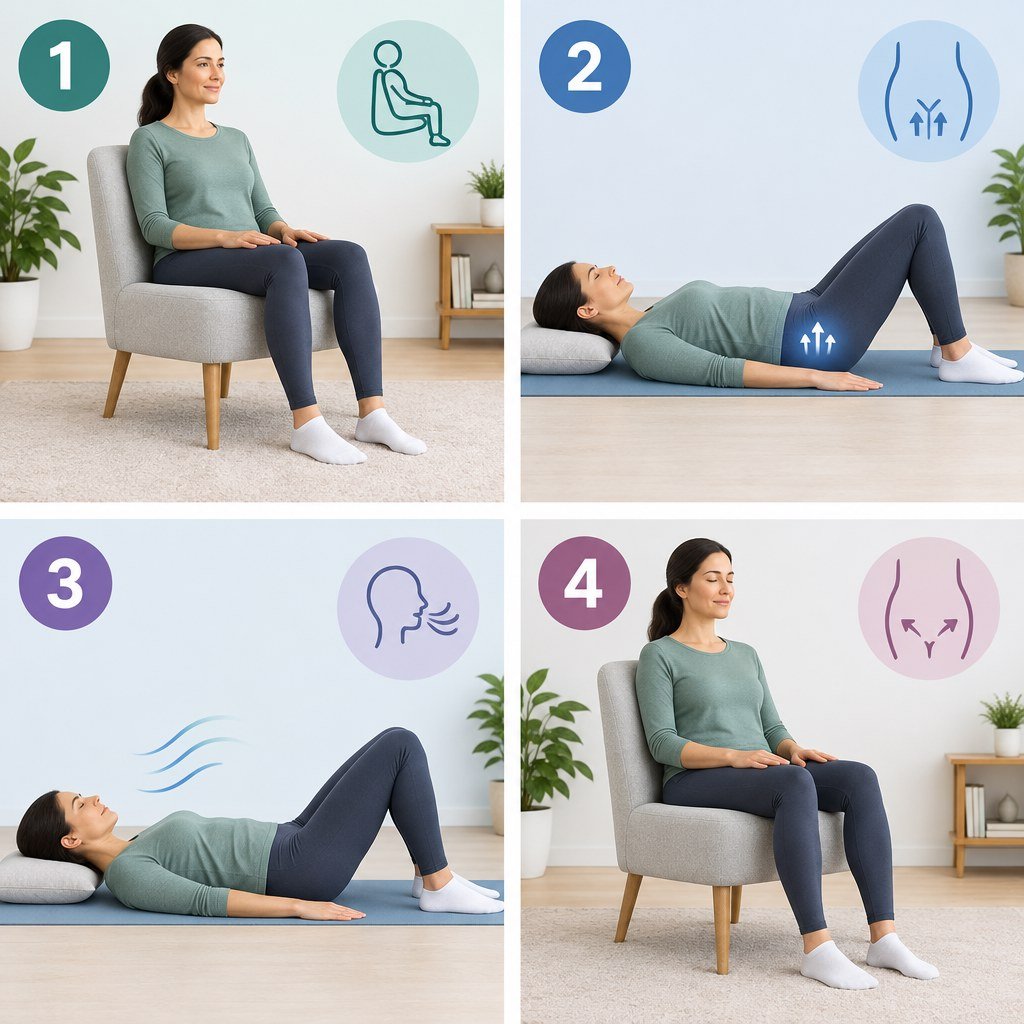
Step 1: Start in a Comfortable Position
Lie down, sit comfortably, or stand if you can identify the muscles easily. Beginners often find lying down easiest because it reduces the need to stabilize the rest of the body.
Step 2: Gently Squeeze and Lift
Contract the muscles around the vagina and rectum as though you are trying to stop passing urine and gas. Think: squeeze, close, and gently lift. Avoid pushing downward.
Step 3: Keep Breathing
Continue breathing normally during the contraction. ACOG and Mayo Clinic both emphasize avoiding breath-holding and unnecessary tightening of the abdomen, buttocks, and thighs.
Step 4: Relax Completely
Release the contraction and let the pelvic floor soften before the next repetition. This part is important. NICE guidance specifically recommends assessing and training both the ability to contract and relax the pelvic floor.
Step 5: Repeat With Control
Repeat only while you can maintain good technique. If the contraction becomes weaker, you start holding your breath, or you cannot fully relax between repetitions, and you end the set rather than forcing additional reps.
A Simple Beginner Kegel Routine
There is no single routine that is ideal for every woman. Clinical programs should be tailored to the person’s ability to contract and relax the pelvic floor, symptoms, discomfort, and treatment goals.
| Exercise | How to Perform It | Main Focus |
|---|---|---|
| Slow contraction | Gently squeeze and lift, hold briefly, then fully relax | Strength and endurance |
| Quick contraction | Contract briefly, then release completely | Faster muscle response |
| Relaxation | Let the pelvic floor completely soften between repetitions | Coordination and control |
Mayo Clinic suggests initially practicing a roughly three-second contraction followed by three seconds of relaxation, while ACOG provides a similar three-second hold and relaxation approach.
For women receiving treatment for stress or mixed urinary incontinence, NICE’s clinical guidance specifies supervised programs lasting at least three months and containing at least eight contractions three times per day. That is a clinical treatment recommendation, not a rule every healthy woman must automatically follow.
Slow vs. Quick Pelvic Floor Contractions
Slow and quick contractions can train different aspects of pelvic-floor control.
Slow Contractions
Gently squeeze and lift the pelvic floor, maintain the contraction only while you can keep breathing and avoid compensating with other muscles, then relax fully. Do not keep holding once the contraction fades.
Quick Contractions
Contract the pelvic floor briefly and release it promptly. A quick contraction should still include a clear relaxation phase. Rapidly pulsing the muscles without releasing them is not the goal.
How Do You Know If You Are Doing Kegels Correctly?
A correct Kegel usually produces an inward and upward sensation around the pelvic floor. It should not feel like bearing down or pushing toward the floor.
| Correct Pattern | Possible Technique Problem |
|---|---|
| Gentle squeeze and lift | Bearing or pushing downward |
| Normal breathing | Holding your breath |
| Thighs mostly relaxed | Gripping the thighs together |
| Buttocks mostly relaxed | Strong glute squeezing |
| Full relaxation afterward | Staying continuously clenched |
| No increasing pain | Pain or worsening pelvic discomfort |
ACOG has specifically cautioned that some women accidentally push downward instead of lifting during pelvic-floor exercises, which can be counterproductive in pelvic-organ prolapse.

Common Pelvic Floor Exercise Mistakes
Holding Your Breath
Breathing normally helps prevent unnecessary whole-body tension. If you need to hold your breath to maintain a Kegel, reduce the intensity or duration.
Squeezing the Buttocks or Thighs
Try to keep these muscles relatively relaxed. The goal is to isolate the pelvic-floor contraction rather than turn the movement into a full-body squeeze.
Pushing Downward
Bearing down is not a Kegel. Think about drawing the pelvic floor slightly upward rather than forcing pressure toward the vagina or rectum.
Skipping Relaxation
The pelvic floor should relax between repetitions. Constantly holding tension is not better training.
Routinely Exercising During Urination
Stopping urine can be used briefly to identify the muscles, but routine training should happen at another time.
Doing More When Symptoms Get Worse
More repetitions are not automatically better. If Kegels increase pelvic pain, pressure, urinary difficulty, or pain during sex, stop increasing the exercise and seek appropriate assessment.
Can You Do Too Many Kegels?
Yes. Pelvic-floor training should not be treated as a contest to accumulate the most contractions.
Some women have pelvic-floor dysfunction involving poor relaxation, increased tension, pain, or coordination problems. NICE recommends tailoring supervised pelvic-floor training to the woman’s ability to both contract and relax, as well as her symptoms and discomfort.
ACOG also describes pelvic-floor physical therapy as part of treatment for chronic pelvic pain, where the goal may include desensitizing or relaxing painful pelvic muscles—not simply strengthening them.
If Kegels consistently make symptoms worse, do not assume you need to work harder.
Pelvic Floor Exercises During Pregnancy
Pelvic-floor muscle training is generally encouraged during pregnancy, but the program should still match the individual’s symptoms and pregnancy circumstances.
NICE encourages women who are pregnant to perform pelvic-floor muscle training and notes that it can help prevent symptoms of pelvic-floor dysfunction. NICE also recommends considering supervised programs for some pregnant women at increased risk.
Pregnancy is not the time to ignore symptoms such as significant pelvic pain, vaginal pressure, unusual bleeding, or medical restrictions on exercise. Discuss those issues with your maternity-care professional.
Pelvic Floor Exercises After Childbirth
Pelvic-floor training can also be useful after childbirth, particularly because pregnancy and delivery can affect the pelvic floor.
NICE encourages pelvic-floor muscle training during routine postnatal care and recommends supervised training for some women with higher-risk birth histories, including certain assisted vaginal births and anal-sphincter injuries.