Building muscle without gaining any fat cannot be guaranteed. A more realistic goal is to create a strong muscle-building stimulus, eat enough to support it, and adjust gradually so that most changes are productive rather than simply pushing body weight up quickly.
For many females, that means resistance training two to four times per week, progressing the exercises over time, eating enough protein and total food, sleeping adequately, and monitoring strength, recovery, and longer-term trends. Beginners and females returning after a break may gain muscle near maintenance intake. More experienced trainees may eventually benefit from a small, controlled increase in food.
Can Females Gain Muscle Without Gaining Fat?
Females can gain muscle with little or no measurable fat gain in some situations, especially during the first months of resistance training or after returning from a long break. However, complete control over muscle and fat changes is not possible, so “minimal fat gain” is a more honest goal than “zero fat gain.”
Muscle hypertrophy occurs when repeated training and recovery lead skeletal muscle fibers to adapt and grow. Food supports that process, but muscle growth is limited by training quality, genetics, recovery, health, and experience. Eating much more does not force the body to build muscle faster once those limiting factors are reached.
Research has not identified one ideal energy surplus for maximizing hypertrophy. A review in Frontiers in Nutrition concluded that the exact surplus required remains unknown. A later eight-week study compared maintenance intake with roughly 5% and 15% surpluses in 21 resistance-trained people. Faster bodyweight gain was more strongly associated with increased skinfold thickness than with greater muscle thickness or strength. Because only two participants were Female and the study was small, it should guide conservative practice and not be treated as a female-specific formula (Slater et al., 2019; Helms et al., 2023). Females do not need a completely separate hypertrophy system. A systematic review found similar relative muscle-growth responses in females and men completing resistance training, although individuals still differ substantially (Roberts et al., 2020). Program design should reflect experience, goals, health, schedule, and exercise preference rather than stereotypes.
Body Re composition vs. Lean Bulking for Females
Body re composition means gaining muscle while reducing or maintaining fat mass, often with little scale weight change. A controlled muscle-gain phase, sometimes called a lean bulk, uses a small, adjustable increase in food to support further training progress.
Neither option is universally superior. The best starting approach depends on whether training is new, whether strength is progressing, and whether the reader is adequately fueled.
| Starting situation | Practical adult starting approach | Why it may fit |
| New to consistent resistance training | Eat regular, balanced meals around current intake | Beginners may build muscle without intentionally pushing scale weight up |
| Returning after a long break | Resume progressive training and adequate protein before changing food intake | Muscle memory and renewed training stimulus may drive early progress |
| Strength and repetitions are improving | Keep training and eating habits stable | There is no reason to change a plan that is working |
| Relatively experienced and stalled despite good programming and recovery | Add a small food portion, then reassess after several weeks | A modest increase may support performance without an aggressive surplus |
| Underweight or showing signs of inadequate fueling | Prioritize adequate intake with professional support | Health, menstrual function, bone health, and recovery take priority |
| Pregnant, postpartum, perimenopausal, or managing a medical condition | Seek individualized guidance | Energy needs, recovery, and exercise considerations may differ |
This framework deliberately avoids rigid bodyfat cutoffs. Consumer bodyfat scales can be imprecise, and a single number does not determine whether a person is healthy, adequately fueled, or ready for a particular nutrition phase.
How Females Can Build Muscle While Limiting Fat Gain
The most reliable strategy has five parts: progressive resistance training, sufficient protein, enough total food, adequate recovery, and slow adjustments based on several weeks of evidence. Each part supports the others.
1. Make Resistance Training the Foundation

Resistance training provides the stimulus that tells the body to adapt by becoming stronger and, over time, increasing muscle size. Use exercises that train every major muscle group and can be progressed safely.
The American College of Sports Medicine’s 2026 position stand emphasizes consistency and individualization. Its evidence review supports training major muscle groups regularly and indicates that higher weekly volume around 10 sets per muscle group is generally favorable for hypertrophy. Machines, free weights, resistance bands, bodyweight movements, and home routines can all work (ACSM, 2026).
A practical beginner framework is:
- Sessions: Two to four resistance workouts per week
- Frequency: Train each major muscle group about twice weekly
- Starting volume: Roughly six to ten challenging working sets per muscle group each week
- Effort: Finish most sets when one to three controlled repetitions may still be possible
- Progression: Add a repetition, a little resistance, a set, range of motion, or a harder variation when current work becomes clearly manageable
Training to complete failure on every set is unnecessary. A meta-analysis found no significant overall advantage for failure training over nonfailure training for strength or hypertrophy, while constantly reaching failure can add fatigue (Grgic et al., 2022). Hard, technically sound sets matter more than making every set maximal.
2. Apply Progressive Overload Without Rushing
Progressive overload means gradually increasing the challenge placed on a muscle. It does not mean adding weight at every workout or sacrificing form to move a heavier load.
Use one progression method at a time:
- Choose a repetition range, such as 8–12.
- Keep the same resistance until all sets reach the top of the range with controlled technique.
- Increase resistance by the smallest practical amount.
- Allow repetitions to return toward the lower end of the range.
- Build them up again over the following sessions.
For bodyweight or band exercises, progression can also come from a longer range of motion, a slower lowering phase, a stronger band, less assistance, or a more difficult variation. Record exercises, resistance, sets, and repetitions so progress is visible.
3. Eat Enough Protein Across the Day
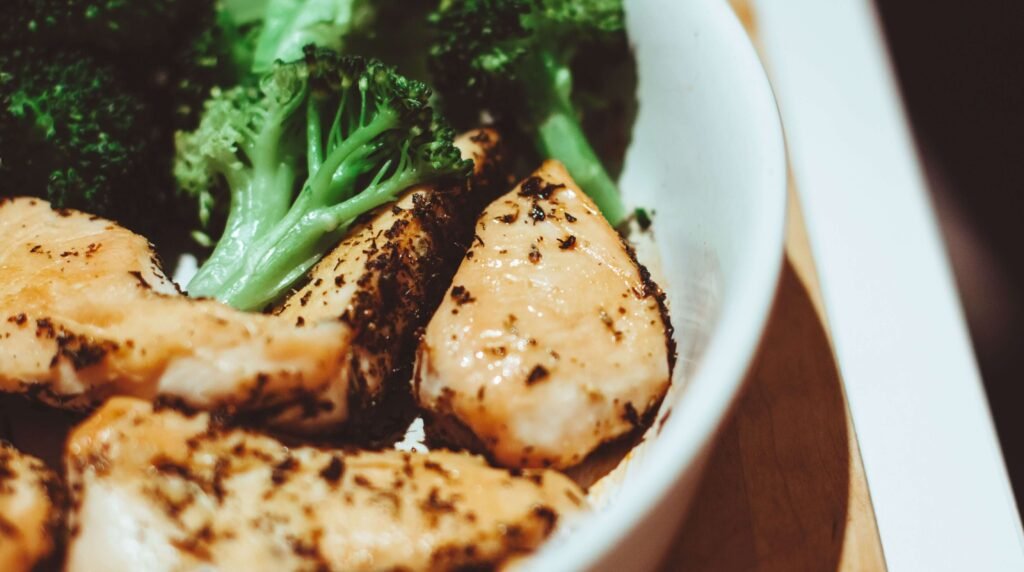
Protein supplies amino acids used in muscle remodeling. For many healthy adults who resistance train, a daily intake around 1.6 grams per kilogram of body weight is a useful evidence-based reference point, not a mandatory number every person must hit exactly.
A large meta-analysis found that protein supplementation produced modest additional gains during prolonged resistance training, with benefits tending to level off above roughly 1.6 g/kg/day for many participants (Morton et al., 2018). The total includes protein from meals, not only shakes or supplements.
An easier non tracking approach is to include a substantial protein source in three or four meals or snacks:
- Eggs, chicken, turkey, fish, or lean beef
- Greek yogurt, cottage cheese, or milk
- Tofu, tempeh, edamame, beans, or lentils
- A protein powder when convenient, not because it is required
Plant-based diets can support muscle gain. Eating varied protein sources and sufficient total food helps provide the essential amino acids the body needs. Anyone with kidney disease or another condition that affects protein needs should obtain medical nutrition advice before deliberately increasing intake.
4. Use a Small, Food-Based Adjustment When Needed
Do not begin by forcing a large calorie surplus. First confirm that training is progressive, protein is adequate, meals are regular, and sleep is reasonable. If strength, recovery, and muscle-gain indicators have been stalled for several weeks, add one modest serving of food each day and observe the response.
Examples include:
- Greek yogurt with fruit and oats
- Milk or fortified soy milk with a banana
- Wholegrain toast with eggs
- Rice or potatoes added to a main meal
- Tofu, chicken, fish, or beans added to lunch
- Nuts or nut butter paired with fruit
This approach can support a controlled calorie surplus for females without requiring obsessive logging. The added food should improve training energy and recovery, not create uncomfortable fullness. Review the pattern after three to four weeks rather than reacting to a few days of scale change.
Carbohydrates are useful for strength training because they help replenish muscle glycogen and support training volume. Rice, oats, potatoes, pasta, fruit, beans, and wholegrain bread can all fit a muscle-gain diet for a Female Athlete. Carbohydrates do not automatically become body fat; the overall pattern of intake and expenditure matters.
Dietary fats also belong in a balanced plan. Olive oil, avocado, nuts, seeds, eggs, and fatty fish provide energy and nutrients. Because some are energy-dense, use portions that support comfortable eating and gradual progress.
5. Protect Sleep and Recovery
Muscle adapts between training sessions, so more exercise is not always better. Include recovery days, keep hard training volume manageable, and aim for consistent sleep.
The CDC recommends at least seven hours of sleep per night for adults ages 18–60 (CDC, 2024). Sleep needs vary, but repeatedly feeling exhausted, losing performance, or struggling to recover may indicate that training stress, life stress, or fueling needs attention.
Use simple recovery checks:
- Is performance stable or improving?
- Does soreness usually settle before the same muscle is trained again?
- Is energy reasonably steady through the day?
- Is motivation to train generally intact?
- For premenopausal females, is menstrual function stable?
Three-Day Full-Body Workout for Lean Muscle Gain
A full-body routine three days per week gives beginners repeated practice and trains major muscle groups regularly. Use a resistance that allows controlled technique and stop a set if form breaks down or pain occurs.
Alternate Workout A and Workout B across nonconsecutive days. For example, use A/B/A in week one and B/A/B in week two.
Workout A
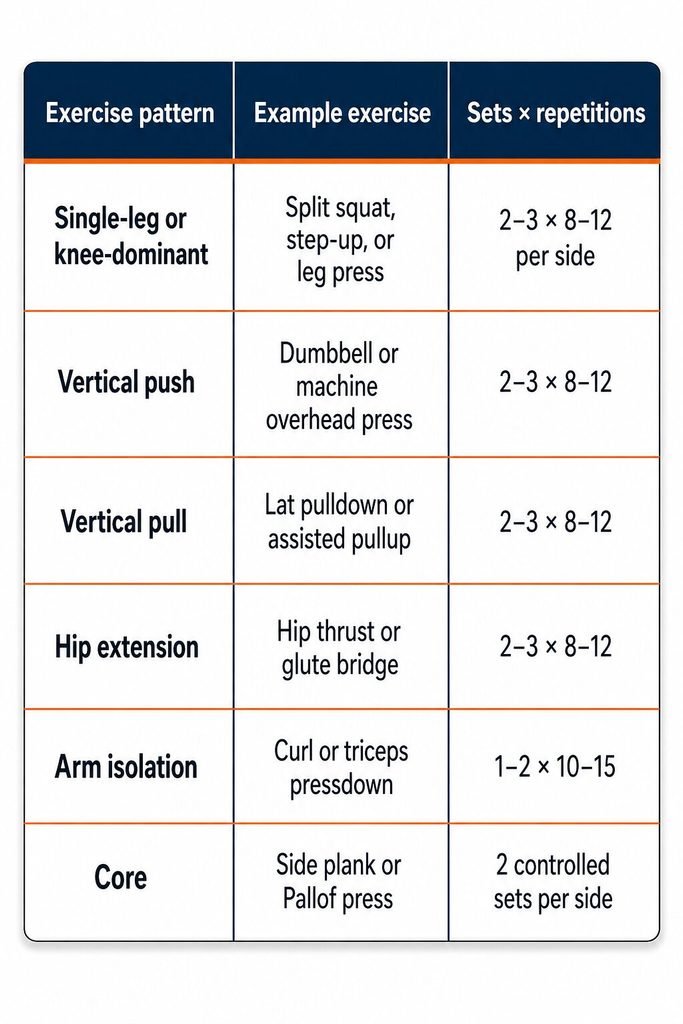
Workout B
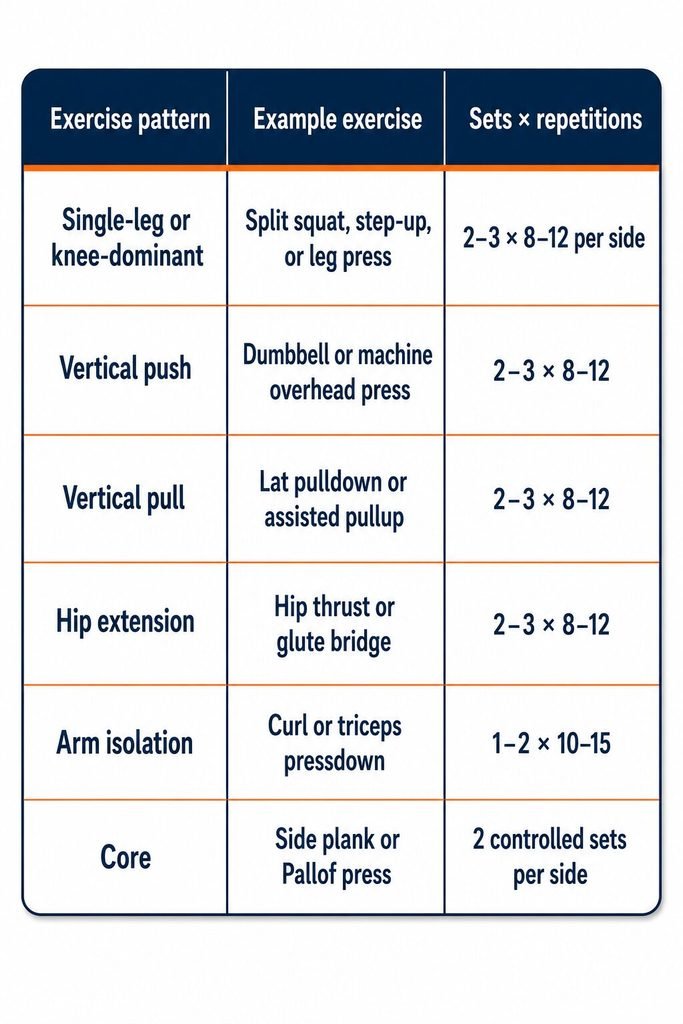
Beginners can start with two sets per exercise. Add a third set only after technique and recovery are consistent. Warm up with several minutes of easy movement and lighter practice sets for the first major exercises.
A Simple Muscle Gain Diet Template for Females
A useful muscle-building meal combines protein, carbohydrate, produce, and a source of dietary fat. Exact foods can change with culture, budget, appetite, allergies, and preferences.
| Meal | Protein | Carbohydrate and produce | Dietary fat |
| Breakfast | Eggs or Greek yogurt | Oats, wholegrain toast, and fruit | Nuts, seeds, or avocado |
| Lunch | Chicken, tofu, fish, or beans | Rice, potatoes, quinoa, and vegetables | Olive oil dressing or avocado |
| Snack | Cottage cheese, milk, soy milk, or edamame | Fruit or wholegrain crackers | Nuts or nut butter if desired |
| Dinner | Lean beef, turkey, lentils, tempeh, or fish | Pasta, rice, potatoes, and vegetables | Olive oil, seeds, or fatty fish |
This is a flexible structure rather than a prescribed lean-bulk meal plan. Appetite, training time, digestion, and food access should shape portions. Protein powder is optional; ordinary food can meet protein needs.
What to Eat Around a Workout
A mixed meal containing protein and carbohydrate within a few hours before or after training is usually sufficient. Nutrient timing can support convenience and workout comfort, but total daily intake and consistent training matter more than a narrow “anabolic window.”
Practical options include:
- Yogurt, oats, and berries
- Eggs with toast and fruit
- Chicken or tofu with rice and vegetables
- A milk or soymilk smoothie with fruit
- Tuna or chickpea sandwich with a side of fruit
Choose lower-fat, lower-fiber foods close to training if larger meals cause stomach discomfort. Hydrate normally and adjust fluids for heat, sweat, and workout duration.
Should Females Do Cardio While Building Muscle?
Yes. Cardio does not automatically prevent muscle growth, and females do not need to remove walking, cycling, swimming, running, or recreational sports from a muscle-building plan.
An updated meta-analysis found that combining aerobic and strength training did not compromise overall muscle hypertrophy or maximal strength compared with strength training alone. However, explosive strength development could be affected when both were performed in the same session (Schumann et al., 2022). Another analysis found a small possible negative effect on muscle fiber hypertrophy, showing that the details and measurement method still matter (Lundberg et al., 2022).
Keep cardio compatible with the main goal:
- Use an amount that leaves enough energy for progressive lifting.
- Separate demanding cardio and lower-body lifting when practical.
- Reduce cardio intensity or duration if leg performance and recovery consistently decline.
- Do not use cardio to punish eating or compensate for every meal.
How to Track Muscle Gain Without Obsessing Over Weight
Track performance and recovery first. Body weight can provide context for adults who are comfortable using it. However, day-to-day changes reflect water, food, sodium, carbohydrate intake, muscle glycogen, and the menstrual cycle, not just muscle or fat.
Use several indicators:
- Training log: Are resistance, repetitions, control, or range of motion improving?
- Consistency: Are most planned sessions being completed?
- Recovery: Is energy stable, and does soreness resolve normally?
- Menstrual health: Are cycles stable for someone who normally menstruates?
- Optional body trend: If comfortable, review an occasional multiweek trend rather than reacting to single readings.
- Optional measurements or photos: Use only if they feel neutral and useful, not if they increase anxiety or frequent body checking.
A Four-Week Adjustment Check
After several consistent weeks, use this decision framework:
| What you observe | What it may mean | Practical response |
| Strength or repetitions are rising, and recovery is good | Current plan is working | Keep training and food intake stable |
| Performance is flat, but workouts and sleep are inconsistent | The problem may not be food | Improve consistency before adding more food |
| Performance is flat despite consistent training and good recovery | Intake or programming may need adjustment | Add a modest food portion or review the program |
| Body weight rises rapidly without better performance | Added intake may be larger than needed | Return to the previous food pattern and reassess |
| Fatigue, recurrent injuries, or menstrual changes appear | Possible under recovery or low energy availability | Reduce training stress and seek professional assessment |
No short-term measurement can prove that a specific pound is muscle or fat. Muscle gain is slow, and strength can improve before visible size changes occur because the nervous system also becomes more skilled at the movements.
Avoid Chronic Under fueling
Trying to remain extremely lean while increasing training can leave the body without enough available energy for health and performance. This is especially important for active females because menstrual changes may be an early warning sign, though people of any sex can develop low energy availability.
The International Olympic Committee describes Relative Energy Deficiency in Sport (REDS) as impaired physiological or psychological functioning caused by problematic low energy availability. Potential effects include disrupted menstrual function, poorer bone health, reduced immunity, impaired recovery, and lower performance (IOC consensus statement, 2023).
Seek help from a physician and a registered dietitian, ideally one experienced in sports nutrition, if you notice:
- Missed or increasingly irregular menstrual periods
- Persistent fatigue or feeling unusually cold
- Recurrent bone stress injuries or other repeated injuries
- Declining performance despite more effort
- Ongoing food anxiety, rigid restriction, or compulsive exercise
These signs are not evidence that someone should “push harder.” Health and adequate fueling come before a lean-bulk target.
Common Mistakes That Increase Fat Gain or Stall Muscle Growth
Eating More Without a Progressive Training Plan
Extra food supports growth only when training supplies an adequate stimulus. Follow a repeatable program and record progress instead of changing exercises every session.
Treating a Large Surplus as a Shortcut
Muscle growth has a limited rate. A large increase in food can make body weight rise faster without producing proportionally more muscle. Start conservatively and adjust only when several weeks of training evidence support it.
Doing More Sets Than You Can Recover From
Training volume must be productive, not merely exhausting. Start near the lower end of a reasonable range and add sets when progress has stalled and recovery remains good.
Avoiding Carbohydrates
Carbohydrates support muscle glycogen and demanding workouts. Removing them unnecessarily can make it harder to train well or eat enough, while eating carbohydrates does not by itself cause fat gain.
Relying on Protein Powder Instead of Meals
Protein powder is a convenient food product, not a requirement. A balanced pattern also needs carbohydrates, fats, fiber, vitamins, minerals, and enough total energy.
Turning Cardio Into Compensation
Cardio can support fitness, but excessive sessions performed to “erase” food may undermine recovery and create an unhealthy relationship with exercise.
Changing the Plan Based on Daily Scale Fluctuations
A high-carbohydrate or salty meal, menstrual cycle phase, and hydration changes can shift scale weight quickly. Judge the plan by longer trends, training progress, recovery, and health.
Practical 12Week Starting Plan.
This simple plan prioritizes habits and performance rather than rapid body change.
Weeks 1–4: Establish the Baseline
- Complete two or three full-body resistance workouts each week.
- Learn technique and record sets, repetitions, and resistance.
- Include a protein source in each main meal.
- Keep meals regular and include carbohydrate around demanding workouts.
- Establish a consistent sleep schedule.
Weeks 5–8: Progress the Training
- Add repetitions within the planned range when technique is solid.
- Increase resistance in small steps after reaching the top of the range.
- Add a set only where recovery is good and weekly volume is low.
- Keep food intake stable if performance is improving.
Weeks 9–12: Review and Adjust
- Compare training performance with weeks one through four.
- Review energy, recovery, sleep, and menstrual health.
- If progress has stalled despite consistency, add one modest daily food serving.
- If fatigue is building, use an easier training week instead of adding more work.
- Continue the approach that supports steady strength and good health.
Frequently Asked Questions
Can females gain muscle without gaining fat?
Sometimes, particularly when new to resistance training, returning after a break, or progressing near maintenance intake. It cannot be guaranteed, so aim to gain lean mass with minimal fat gain rather than expecting perfect calorie partitioning.
Should Female lean bulk or body re comp?
Beginners who are gaining strength can often start near their current intake and focus on body re composition. A relatively experienced trainee whose progress has stalled despite good training and recovery may benefit from a small, controlled increase in food.
Do females need a calorie surplus to build muscle?
Not always. Muscle gain can occur near maintenance and sometimes during an energy deficit, particularly in beginners or returning lifters. A modest surplus may become useful when a well-trained person can no longer progress with current intake. Research has not established one perfect surplus.
How much protein do females need for muscle gain?
For many healthy adults who resistance train, approximately 1.6 g/kg/day is a useful evidence-based benchmark. It is not uniquely female, and more is not automatically better. A registered dietitian can personalize intake for health conditions, pregnancy, plant-based diets, or other needs.
Do females need to lift heavy weights?
Muscles can grow across a range of loads when sets are challenging and technique is controlled. Heavier weights are especially useful for maximizing strength, but moderate and lighter resistance can also build muscle. Choose loads that allow safe progression.
Can females build muscle at home?
Yes. Bodyweight exercises, resistance bands, and adjustable dumbbells can provide enough resistance when exercises become progressively harder. The 2026 ACSM guidance specifically re cognizes home-basedd and nontraditional resistance training as effective.
Should every set reach muscle failure?
No. Many productive sets can end with roughly one to three repetitions in reserve. Occasional failure may be appropriate for some safer isolation exercises, but it is not required for every set or exercise.
Will cardio stop a female from building muscle?
Usually not. Moderate cardio can coexist with muscle gain. Problems are more likely when total training stress is too high, cardio consistently reduces lifting quality, or food and recovery are inadequate.
How do females know whether weight gain is muscle?
No home method can label each change perfectly. Increasing strength and repetitions, stable recovery, and gradual multiweek trends together provide better evidence than scale weight alone. Consumer body fat estimates can fluctuate and should not be treated as precise.
How can a woman avoid gaining belly fat while building muscle?
Body fat distribution cannot be controlled or spot-selected. The practical strategy is to avoid an unnecessarily large food surplus, train progressively, and monitor longer-term performance and health. Promises of directing all gain to one body area are not credible.
Can females build muscle after menopause?
Yes. Resistance training remains effective, although age, recovery, health, and protein needs may influence the plan. A clinician or qualified exercise professional can help adapt training for osteoporosis, joint conditions, or other medical considerations.
Conclusion
The best answer to how to gain muscle without gaining fat for female readers is not a rigid calorie formula. It is a controlled process: train every major muscle group consistently, apply progressive overload, eat protein-rich, balanced meals, use only a modest food increase when progress truly calls for it, and protect recovery.
Some females, especially beginners, may improve body composition without intentional weight gain. Others may need a slow muscle-gain phase. In both cases, strength, performance, energy, and menstrual health are more useful guides than the pursuit of a perfectly lean appearance.
Choose two or three full-body sessions for the coming week, record your starting exercises and repetitions, and keep your meals regular. Reassess after four consistent weeks before making major changes.