
A useful full-body bodyweight workout for beginners uses six movements: a squat, push-up, hip extension, single-leg exercise, upper-back movement, and trunk exercise. Start with two nonconsecutive days per week and choose variations that leave two or three controlled repetitions available at the end of each set.
The workout requires no weights, jumping, or advanced calisthenics—only floor space and a stable surface for easier push-ups or balance support.
Beginner Bodyweight Workout at a Glance
Complete the exercises as straight sets: finish all sets of one movement before starting the next. This format provides enough rest to practice each exercise with control and is easier for beginners to track than a nonstop circuit.

| Program detail | Starting recommendation |
|---|---|
| Frequency | 2 nonconsecutive days per week |
| Session length | Approximately 20–30 minutes |
| Rest between sets | 60–120 seconds |
| Effort | Finish most sets with 2–3 good repetitions available |
| Progression | Add repetitions, then choose a harder variation |
| Initial duration | Follow for 4 weeks before making major changes |
Can Beginners Improve Strength With Bodyweight Training?
Yes. Bodyweight exercises can improve strength and physical function when the movements are challenging enough and progress over time. They are especially practical for beginners who need to learn basic movement patterns before adding external loads.
The American College of Sports Medicine’s 2026 resistance-training guidance recognizes bodyweight exercises and home-based routines as effective options. It emphasizes regular participation and training the major muscle groups at least twice per week over unnecessarily complex programming. ACSM resistance-training guidance
Research also supports progressing bodyweight movements rather than repeating an easy version indefinitely. A randomized study of progressive calisthenic push-up training found improved upper-body strength after four weeks, although one small study cannot establish how every person or exercise will respond. Kotarsky et al., 2018
Bodyweight resistance eventually becomes difficult to increase precisely. Stronger trainees may need harder leverage, single-limb variations, bands, or weights to continue progressing some muscle groups.
Who Should Use This Routine?
This routine is intended for generally healthy adult beginners who want a low-impact home workout without weights. It also works as a restart plan after a period of inactivity when the easiest variations are selected.
The program may suit someone new to structured resistance exercise, has minimal space, cannot yet perform floor push-ups or unsupported lunges, and can commit to two short weekly sessions.
This is not an injury-rehabilitation or condition-specific program. If you need individualized modifications because of an injury, pregnancy, chronic condition, balance concern, or medical exercise restriction, consult an appropriately qualified healthcare or exercise professional.
Prepare a Safe Workout Space
Clear enough floor space to extend your limbs without hitting furniture. Test every support, and use a wall or stable counter instead of a movable chair for incline push-ups. A chair used for squat depth or balance must not slide or tip.
Avoid rows from ordinary tables, doors, sheets, towels, or furniture not designed to support your weight. Use a clean, dry, nonslip surface.
Use This Five-Minute Warm-Up
A short warm-up should gradually increase movement and rehearse the workout without creating fatigue. Complete one controlled round.
- March in place for 60 seconds.
- Perform 8 chair squats.
- Perform 8 unweighted hip hinges.
- Perform 6 wall push-ups.
- Perform 6 alternating reverse steps while holding a stable support.
- Perform 6 bird dogs per side using a comfortable range.
If the first working set still feels stiff or unfamiliar, use an easier variation for several additional practice repetitions.
Complete Full-Body Bodyweight Workout
These exercises cover the main beginner movement patterns. Control each repetition without forcing an uncomfortable tempo or range.
1. Chair Squat or Bodyweight Squat
Use a chair to guide squat depth when an unsupported version is not yet comfortable.
Stand in front of a stable chair, move your hips slightly backward, and bend your knees. Lower until you lightly touch the chair or reach your controlled depth, then stand without bouncing from the seat.
Make it easier: Use a higher seat or lightly hold a stable support.
Make it harder: Remove the chair, pause at the bottom, or progress to a controlled split squat.
2. Wall or Incline Push-Up
An incline push-up trains the chest, shoulders, and triceps. A higher hand position is generally easier.
Place your hands on a stable wall or counter and step back into a straight-body position. Lower your chest toward the surface, then press away without letting your hips sag or your shoulders shrug.
Make it easier: Use a wall or higher stable surface.
Make it harder: Use a lower secure surface, then progress toward a floor push-up.
Do not rush toward knee or floor push-ups if the incline version still challenges you within the target repetition range.
3. Glute Bridge
The glute bridge trains the glutes and back of the legs without external resistance.
Lie on your back with your knees bent and feet supported. Press through your feet, lift your hips to a comfortable height, pause without exaggerating your lower back arch, and lower under control.
Make it easier: Use a smaller range.
Make it harder: Add a longer pause, marching bridge, or carefully controlled single-leg bridge.
4. Supported Split Squat or Reverse Lunge
The supported split squat trains one leg at a time and is usually easier to control than a moving lunge.
Stand in a staggered position beside a stable support. Keep both feet in place, bend your knees through a comfortable range, and press through the supported front foot to return.
Make it easier: Shorten the range and use more support.
Make it harder: Use less support or progress to a reverse lunge.
If this movement duplicates too much leg work during your first week, perform only one set per side.
5. Prone W Raise or Reverse Snow Angel
Prone W raises provide light work for the upper back and rear shoulders, but they are not equivalent to a progressively loaded row. Use them as an equipment-free starting movement.
Lie face down with your forehead supported if comfortable and bend your arms into a W. Gently lift your hands and elbows while drawing your shoulder blades back, then lower without forcing your neck upward.
Make it easier: Keep your hands on the floor and practice the shoulder-blade motion.
Make it harder: Alternate W raises with controlled Y and T arm positions or reverse snow angels.
6. Dead Bug or Bird Dog
The dead bug trains trunk control; use a bird dog if lying on your back is uncomfortable.
For a dead bug, lie on your back with your hips and knees bent. Slowly lower one heel or extend the opposite arm and leg while keeping a steady trunk position. Return and alternate sides.
Make it easier: Move only one heel at a time.
Make it harder: Extend the leg farther or use a longer opposite arm-and-leg reach without losing control.
The Limitation of Equipment-Free Back Training
A bodyweight-only workout cannot easily provide a safe, scalable pulling exercise without suitable equipment. Floor movements such as prone W raises train shoulder-blade control, but they do not challenge the back and biceps like rows or pull-ups.
Some online programs suggest pulling from tables, doors, towels, or bedsheets. These setups may shift, break, or fail unexpectedly. Do not use household objects unless the manufacturer specifically designed and rated them for that exercise.
When practical, add one of the following for 2 sets of 8–15 repetitions:
- A one-arm row with a securely loaded backpack
- A resistance-band row using the manufacturer’s approved setup
- A dumbbell row with stable hand support
- An inverted row or assisted pull-up on purpose-built equipment
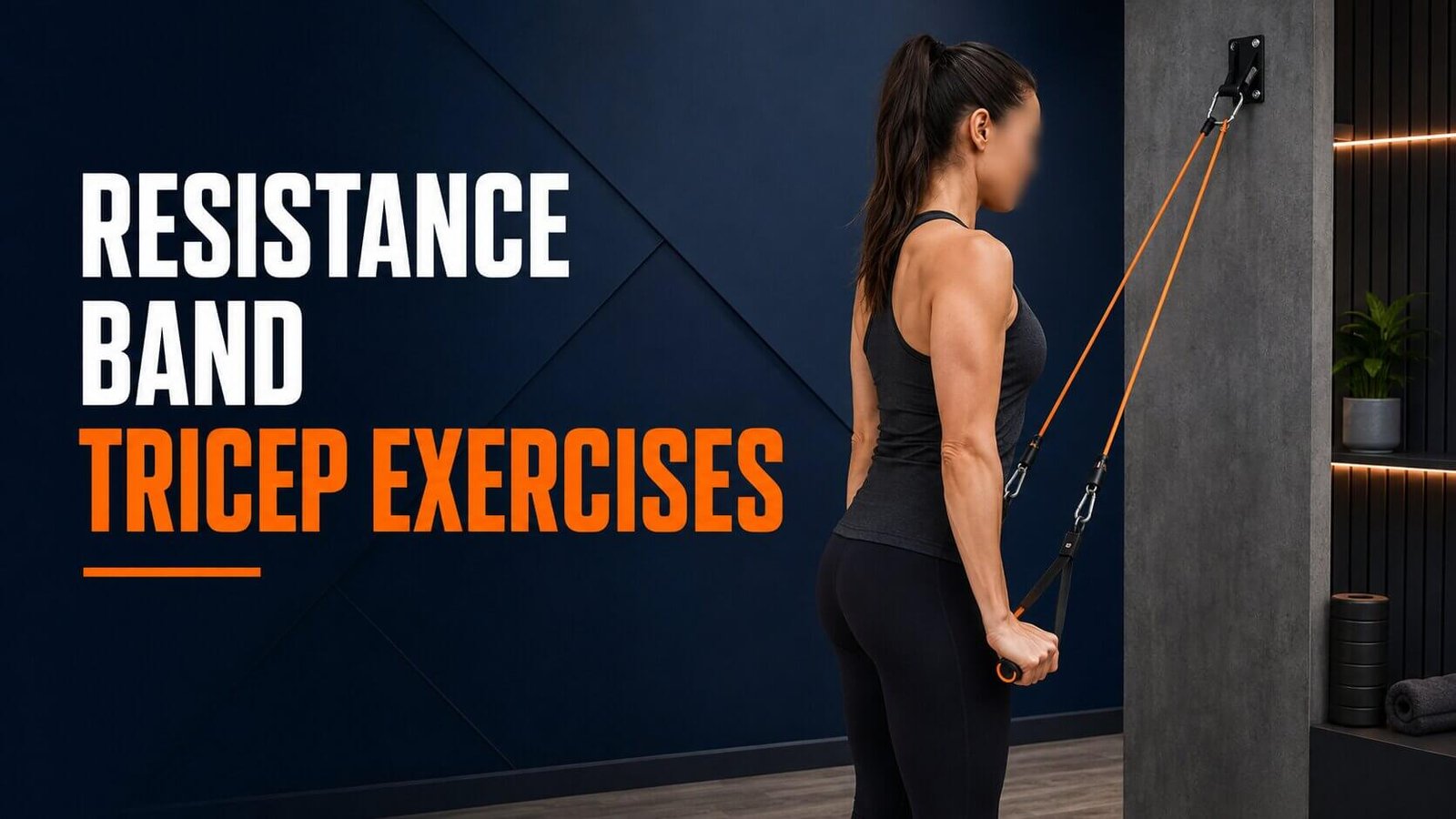
This addition makes the program more balanced and easier to progress. See the resistance-band home training guide for equipment and setup options.
How Many Sets and Repetitions Should Beginners Do?
Start with one or two sets per exercise and use the ranges in the workout table. Choose a variation that feels challenging by the final repetitions while leaving approximately two or three good repetitions available.
Repetitions in reserve, or RIR, estimates how many more controlled repetitions you could complete. Stopping at 2 RIR means you believe about two good repetitions remained. The estimate does not need to be exact; it simply prevents every set from becoming an all-out test.
Rest 60–120 seconds between sets. Take more time if breathing, balance, or fatigue would interfere with the next set. Short rest is not automatically more effective.
Should You Perform the Exercises as a Circuit?
Beginners should usually start with straight sets rather than a nonstop circuit. Resting between sets makes it easier to learn technique and select the correct exercise level.
After several weeks, you may alternate exercises that do not compete heavily—for example, a squat set followed by a push-up set. Keep enough rest to maintain control. Circuit training is an optional organization method, not a requirement for bodyweight exercise to work.