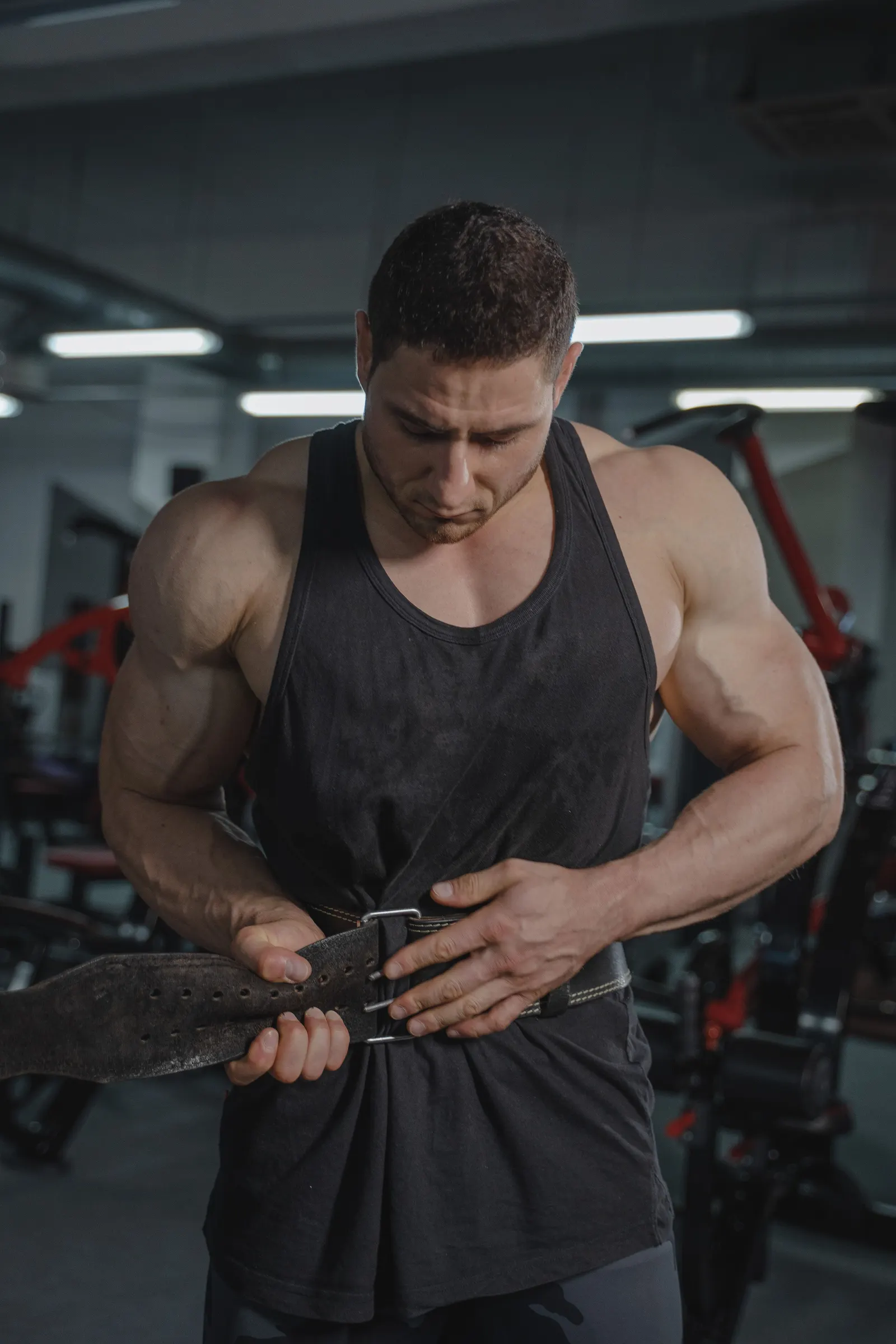
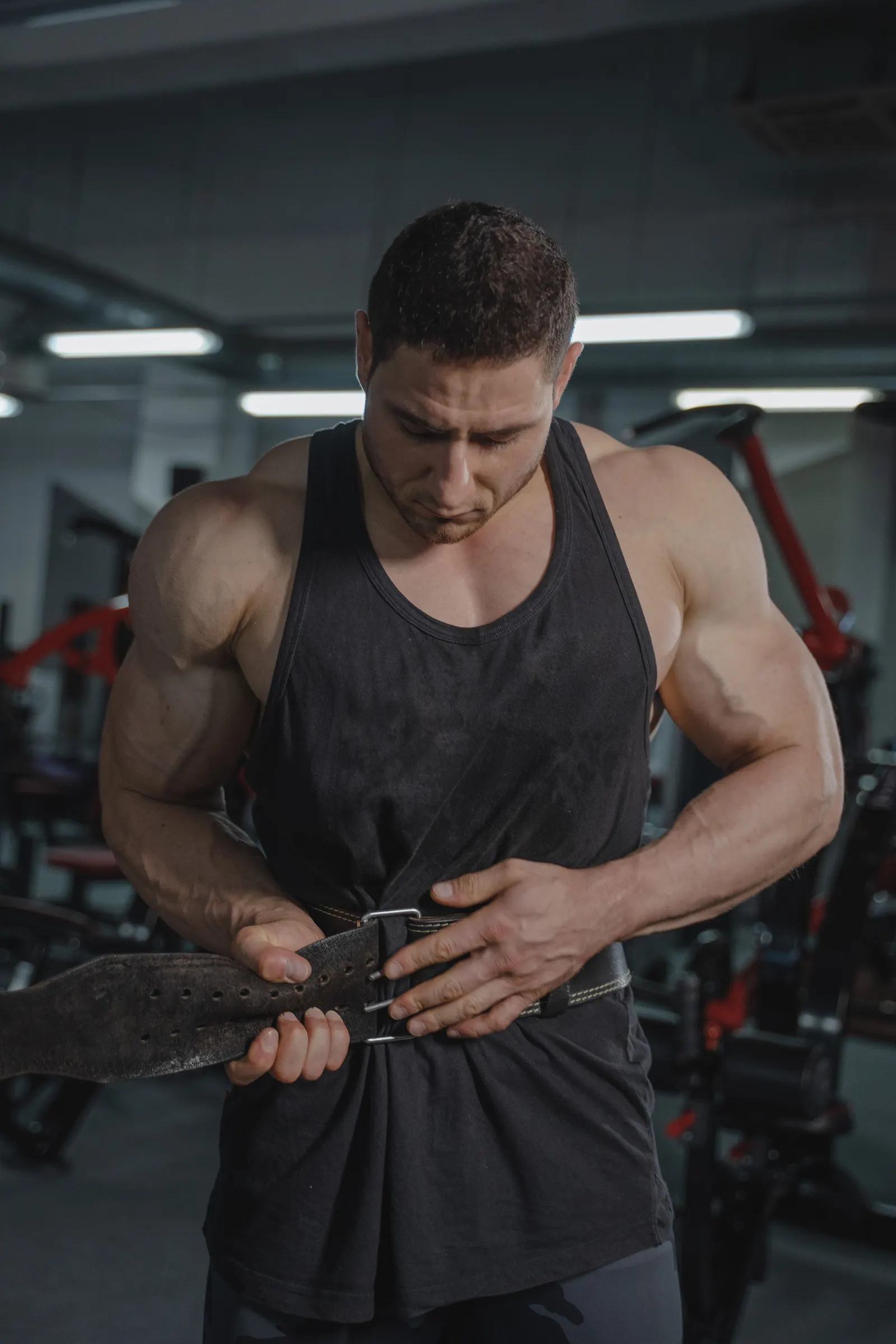
A weightlifting belt should fit snugly around the area where you brace while still allowing you to take a full breath and expand your abdomen against the belt. If it is so tight that you cannot breathe and brace effectively, it is too tight. If it shifts easily or gives you nothing firm to brace against, it may be too loose.
Rogue’s current fit guidance makes the same point: a lifting belt should feel secure without restricting breathing or movement. Measure where you actually plan to wear the belt rather than using your pants size.

- PREMIUM GENUINE LEATHER BELT: 100% real leather weightlifting belt features double-row stitching and reinforced construc…
- SUPERIOR LIFTING PERFORMANCE: Enhances core support, stabilizing lower back during heavy lifting. Helps maintain proper …
- COMFORT WITH RIGID SUPPORT: 4″ wide lifting belt balances comfort and stability. Contours to the body and keeps proper s…
How Tight Should a Weightlifting Belt Be?
The belt needs to be tight enough to give your trunk a firm surface to brace against, but not so tight that it prevents abdominal expansion.
Rogue advises that if a belt is so tight that you cannot expand your abdomen while breathing, it is likely too tight. The goal is to create pressure against the belt, not simply pull it as tight as possible.
A Simple Fit Test
- Place the belt around the area where you normally brace.
- Fasten it snugly.
- Take a full breath into your abdomen and sides.
- Brace as you would before a squat or deadlift.
- Check whether you can push your trunk firmly into the belt.
- Perform a few warm-up repetitions.
If you cannot breathe normally between reps, the belt pinches sharply, or you cannot expand your abdomen, loosen it. If the belt slides or feels irrelevant during bracing, try one adjustment tighter.
Where Should a Weightlifting Belt Sit?
Most lifting belts sit around the midsection, often slightly above the hips, where the lifter can brace comfortably.
The exact position can vary with:
- torso length,
- rib and hip anatomy,
- belt width,
- squat or deadlift stance, and
- personal comfort.
A belt does not have to sit at exactly the same height for every lift. Some lifters shift it slightly for squats versus deadlifts.
How to Measure for the Correct Belt Size
Do not order from your jeans size.
Rogue recommends measuring your midsection where you plan to wear the belt. Product charts can differ, so use the specific sizing table for the exact belt.
Measurement Steps
- Wear the clothing you normally lift in.
- Stand relaxed.
- Wrap a soft measuring tape around the belt position.
- Keep the tape snug but do not pull your stomach in.
- Compare the number with the manufacturer’s chart.
Ideally, your measurement should fall comfortably within the adjustment range instead of at the extreme first or last hole.
Signs Your Belt Is Too Tight
- You cannot take a full breath.
- You cannot expand your abdomen against the belt.
- The belt causes sharp pinching at the ribs or hips.
- You feel forced into an unnatural posture.
- You need to unfasten it immediately after every repetition because breathing is restricted.
Some pressure is expected during heavy bracing. Painful restriction is not the goal.
Signs Your Belt Is Too Loose
- The belt slides noticeably during setup.
- You can rotate it around your torso easily once fastened.
- You cannot feel meaningful contact when you brace.
- The belt moves up or down repeatedly during a lift.
Does Belt Width Affect Fit?
Yes. Width changes how much of your torso the belt covers.
Rogue notes that narrower belts can provide more mobility for lifters with shorter torsos, while wider belts provide more coverage for heavy strength training. A standard 4-inch powerlifting belt may fit one athlete comfortably but dig into another athlete’s ribs and hips.
Shorter Torso
A narrower or tapered belt may reduce interference between the rib cage and hips.
Powerlifting
Many powerlifting belts use the same width around the entire circumference, which creates a consistent surface for bracing.
Olympic Weightlifting and Mixed Training
Tapered or flexible nylon belts can allow more movement during dynamic lifts and conditioning.
How Should a Lever Belt Fit?
Lever belts are quick to close once adjusted, but the lever position is set more permanently than a prong buckle. That makes sizing important.
If your waist measurement changes significantly between sessions or you prefer different tightness for different lifts, you may need to reposition the lever hardware.
How Should a Prong Belt Fit?
A prong belt provides multiple holes for small adjustments. Choose a size that leaves useful holes in both directions rather than forcing you to use the very first or last hole.
How Should a Nylon Belt Fit?
Nylon belts with hook-and-loop closures can be easier to fine-tune. They should still allow full breathing and bracing while remaining secure during the lift.
Should Beginners Wear a Belt?
A belt is a training tool, not a requirement for learning strength exercises. Beginners should still learn appropriate technique and trunk bracing without assuming a belt fixes poor form.
If you are deciding whether a belt makes sense for your training, see our guide to weightlifting belts for beginners.
Common Belt-Fit Mistakes
- Ordering by pants size.
- Cinching the belt as tight as possible.
- Choosing a 4-inch belt when it painfully contacts ribs and hips.
- Assuming the belt must sit in one identical position for every lift.
- Using the wrong size because the measurement falls at the edge of the chart.
- Expecting the belt to replace proper bracing technique.
Frequently Asked Questions
Should you be able to fit fingers under a lifting belt?
Finger rules are imprecise because belt material and body shape differ. A better test is whether the belt feels secure and still lets you take a full breath and brace into it.
Should a weightlifting belt hurt?
A stiff belt may feel firm, especially when new, but sharp pinching, numbness, or painful restriction suggests the fit, width, or position needs adjustment.
Can a lifting belt be too loose?
Yes. If it shifts freely and gives you little resistance to brace against, tighten it or reconsider the size.
Where should a lifting belt sit for deadlifts?
Position varies by anatomy. Many lifters wear it around the midsection, sometimes slightly higher or lower than for squats to avoid hip or rib interference.
Final Summary
A weightlifting belt should feel secure and supportive while still allowing a full breath and strong abdominal expansion. Measure where the belt will actually sit, use the manufacturer’s sizing chart, and adjust position and tightness based on your anatomy and lift.